

I never cease to be impressed by the cultural environment experienced and described by men from other times. For me, it is immersing myself in a parallel reality that I would think impossible if there were not so many testimonies in different languages and from different times. Everything seems to point to me that I and my circumstance are the exceptions. Every time I go through these diaries, letters and the like, it is not without a smile on my face that I make my notes. Letters! There are no letters anymore; the epistolary genre has become almost poetic. And to think of all this literature conceived under the smell of ink, feathers, lamps, sturdy furniture… and outside theaters, operas, soirees… is a whole reality that impresses above all by its contrast. Perhaps it is all very well, and it is a privilege to be able to appreciate it with this charm only conferred by time…
Category: Notes
The Idea of the University and the Ideas of the Middle Classes
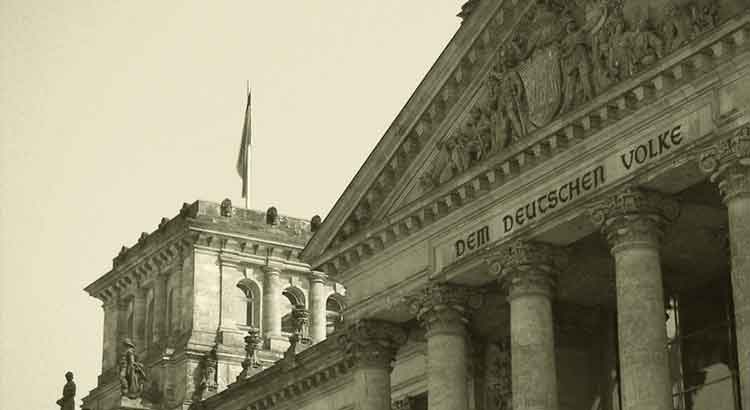
The picture painted by Carpeaux in his essay The Idea of the University and the Ideas of the Middle Classes is impressively current. The situation, moreover, has only worsened. The “regression of an elite to the condition of a mass adorned with academic titles” is a consummate phenomenon in the West. This is largely due to this tendency toward specializations, both necessary and destructive, which has pushed high culture into limbo and curtailed the possibilities for the common individual who, as soon as he gets to know himself, finds himself more often than not crushed by the empire of necessity, which today takes up such a large part of his life that it would have seemed absurd in times past for someone called “free”. Universities, in keeping with today’s trend, teach professions and make careers possible: that is what the market demands. Cultural education is no longer part of the scope of the courses, and so the student leaves secondary school today semi-literate to spend the rest of his life without hearing a single word about history or literature. Universities grow, a huge mass of people graduate, specialize, collect academic titles and gain prestige, money, recognition; “but, in general, these masses of graduates are distinguished from the illiterate only by a professional authority that makes them less useful than dangerous.” It is a disaster.
It Is a Formidable Audacity That Money…

It is a formidable audacity that money has invaded the field of philosophy in the way it has. These days, any self-respecting treatise on individual freedom must devote a good few pages to this earthly and unpleasant subject. It is as if a huge bucket of dirt had been thrown on top of a fountain of idealistic conceptions. It does not seem that it would be possible today to live as many ascetics of times past lived; that is, it is unlikely that, today, those would not be subjected to necessary slavery. It is true that lack of money limits freedom, and one does not have to be a materialist to accept the hypothesis that, yes, money can also increase it. But what can money do for human freedom? At what point is it superfluous? If the common man, perforce, has to take part in the money-making culture, it is quite right that he should determine how much and how far he should sink. So therein lies an important object for ethics…
Eckermann’s Goethe
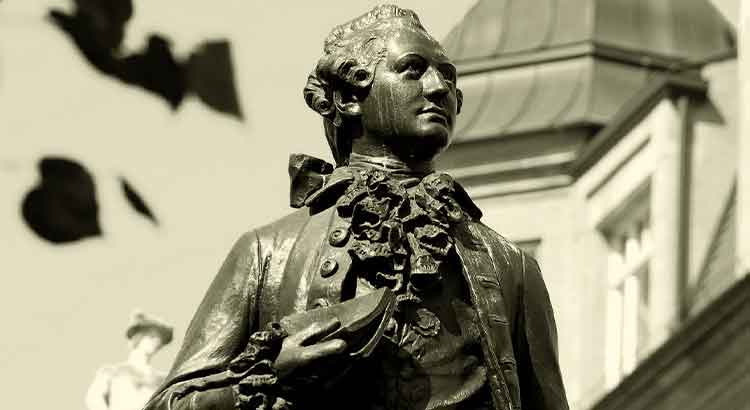
I let Eckermann’s Goethe speak while my mind is taken by a whirlwind of comments by Nietzsche, Jung, and Cioran. And I oscillate while Goethe talks about art and a thousand other subjects, sometimes enjoying his words, sometimes experiencing a complete strangeness. A complex and admirable spirit, no doubt. But a spirit from whom I think I am estranged, by inclinations and by the very conception of poetry, the poet and art. Goethe’s greatness as an artist and as a man is unquestionable. However, one could add here a truckload of reservations, which fortunately are not necessary because they are already present in Jung’s work.