
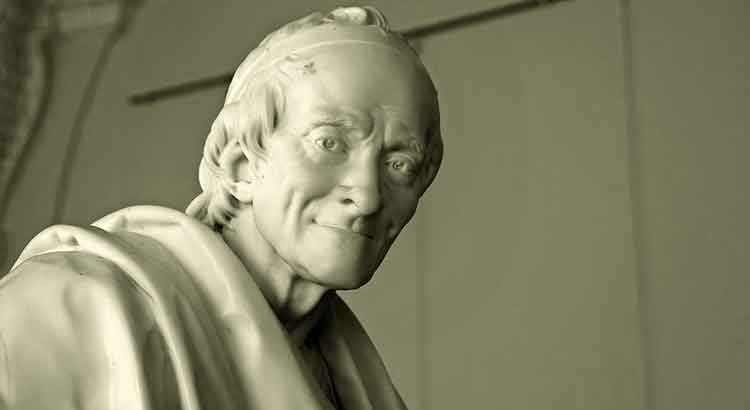
Voltaire, more than anyone, had to believe in the existence of a superior entity that granted him the grace to hit a prize horse and enjoy a stability that, to the overwhelming majority of mortals, seems like a fable. Voltaire, Voltaire… you have been roundly ungrateful! And look at that! As if this nonsense were not enough, we have a crowd of Boehmes who, unenlightened, feel enlightened. All this seems extraordinary to me. Are these consequences of hope? Is hope based on a need, and therefore absent in the eminent lucky one? Could it, so, be classified as a prize? Perhaps, perhaps…
Category: Notes
The Writer Can Sleep Even on the Floor…
It was Faulkner, I think, who said that the writer can sleep even on the floor, but needs a decent place to work. The idea is interesting in many ways. First, it shows the need for seriousness in dealing with one’s work; otherwise, it is difficult to do anything of value. Having a “decent” place to work, even if there are no decent conditions in the rest of life, is a proof of priority, of respect for one’s occupation. Psychologically, it is to know that there is the most important moment of the day, the moment for which the routine is shaped and efforts must converge. With this, several problems are overcome. There is another noteworthy aspect: the comfort of a “decent” place confronted with the “sleeping on the floor” is satisfaction for someone who, used to inadequate conditions, settles down in a propitious and stimulating environment. A reasonable chair, a table, light, and silence; a set schedule and a commitment set in stone—thus, excuses arising from mental weakness are burnt away.
The Utopian Character of the Unique Possibility of Social Harmony
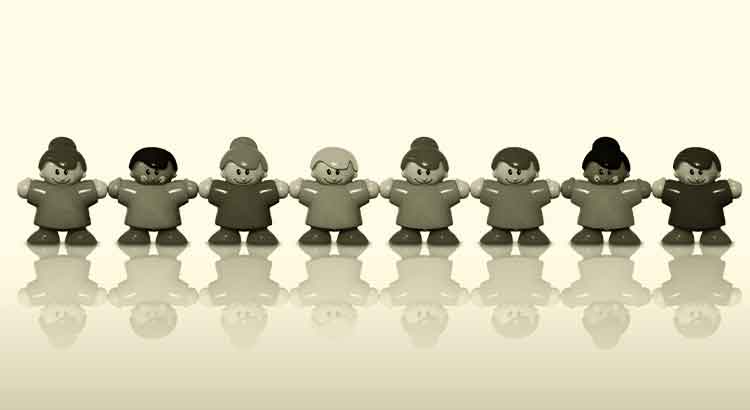
It is curious to note the utopian character of the unique possibility of social harmony. This would basically imply individual freedom and protection against attempts to violate it. And it is impossible because the same individual who lacks freedom manifests an uncontrollable impulse to violate the freedom of others in order to fulfill his desires. This impulse, of course, is lessened by increasing the distance between individuals, freeing one from the presence of the other—which is not possible in modern overpopulated cities. It is necessary, then, for them to work it out, or for someone to force them to work it out. But an impasse arises: to fully tolerate the other is anarchism and chaos; the opposite path is the suppression of freedoms. From this, it can be observed that living together necessarily creates imbalance, and some social stability can only be achieved by prohibiting, controlling, preventing, which ends up causing the natural reaction of the one whose freedom has been violated, which is the same one who needs to impose himself, invading the freedom of others, and which represents the unquestionable justification for prohibitions and controls. Sociology is the end!
Religious Practice Loses Its Nobility When…
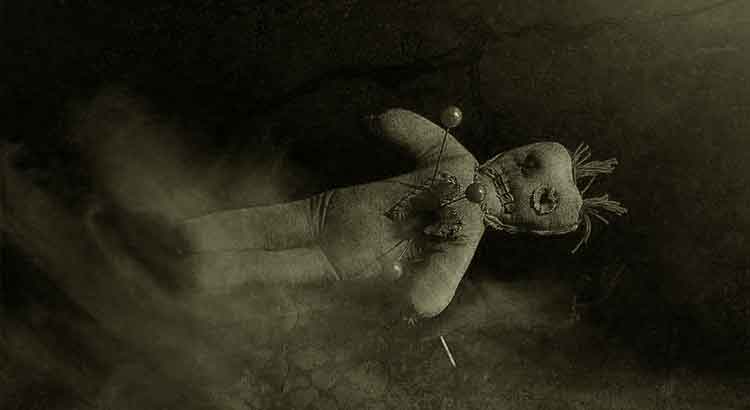
Religious practice loses its nobility when, instead of working for spiritual purification, it serves man as a compensation for the vices routinely practiced or, worse, becomes a vehicle for the expression of all of them. It is natural that man, having evil within himself, seeks means to channel it. But to see religions, that is, practices that should strive to free man from his own misery, giving rise to envy, vanity, revenge, the impulse to affirm oneself to the detriment of others, and countless other lamentable and destructive manifestations, induces immense disgust and the bitter conclusion that the species definitely has no solution.