
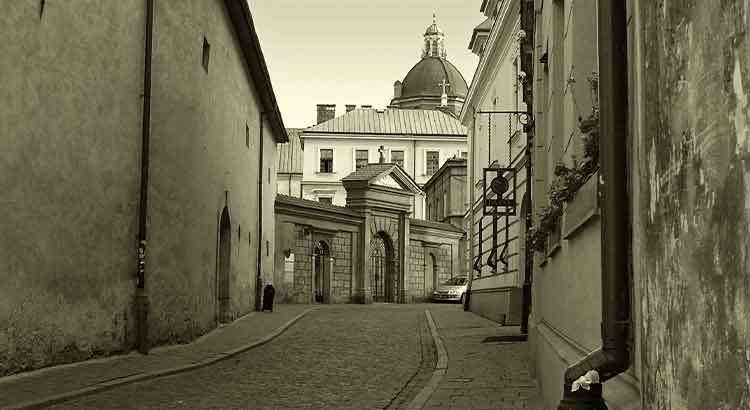
It was some theosophist who said that religions have arisen properly, each to the civilization in which they broke out. It seems an overly poetic statement, implying a universal harmony existing only in fantasy, and violently refuted by history. Before civilizations, there are individuals, and for these are not usually offered a menu of beliefs, so that they can consciously choose the one most suited to themselves—worse would be to judge them essentially suited to their own environment. It would be correct to say that civilizations have shaped the religions that have flourished within them, whether they were appropriate or not. Religions have always thrived in the midst of intense conflict, real battles both on a social and individual level. The first test of a religion is to overlap the previous beliefs. From this we can see the obvious: if religions had been born so perfectly suited to their environment, we would have peace, and not, as history shows, a progressive and violent “adaptation”.
Category: Notes
Vocation Demands Regular Affirmations
Thanks to Fernando Pessoa, I have traveled paths I never imagined. I am moving forward over repulsions, over fears, over lack of interest, and I find myself oscillating between indifference and curiosity. An intellectual curiosity, it is true. And then? Then possibilities opened up for me, so to speak, and the intellectual horizon of the poet proved to be wider than I thought. A vocation demands regular and variegated affirmations, it has to strengthen itself through diverse elements of reality, that is, it has to affirm itself by them, absorbing them into itself. And it seems to me that Pessoa’s unusual paths contributed greatly to his becoming what he is—in other words, to his achieving a very rare degree of affirmation.
When Certainty Is Not Possible
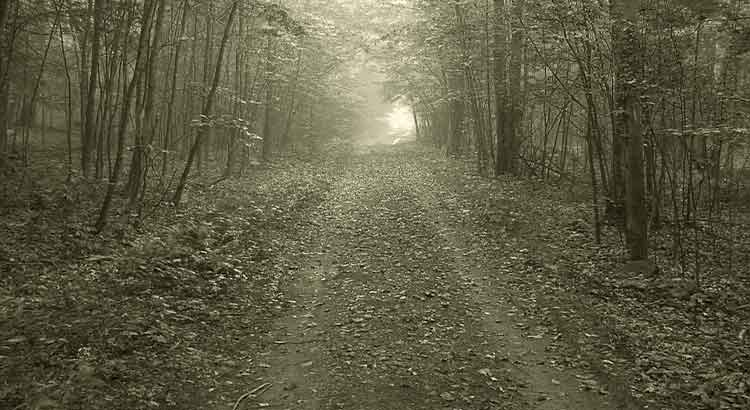
When certainty is not possible, or is a matter of nature, a man must be courageous enough to act guided by clues. A clue shrouded in thick darkness must be satisfactory, he must cling to the little he has—otherwise, he locks himself in inertia. So, find the clue! Find it and hold on to it firmly! Follow the path suggested by it and hold on to the possibility—because this is, without a doubt, better than nothing.
However Irrational and Uncomfortable It May Be…
However irrational and uncomfortable it may be, it is compelling, for the one who sees, to admit that there are coincidences so striking, so incredibly expressive,—though sometimes of obscure significance,—that to deny them or even to keep silent about them seems unworthy of the appreciation of honesty. “Coincidence” is an incorrect term, “chance” a justification that affronts the intelligence capable of simple mathematics, which soon rates it as an inadmissible absurdity, the greatest of all possible absurdities. From this, unfortunately, no safe conclusions can be drawn, no certainties can be extracted that fully clarify the mystery, but it seems nobler to say what is seen with conceivable words instead of denying the patent for the inability to express it.