
Thomas Carlyle’s essay on Mohammed is remarkable. First, for the superior prose: how impressive to follow him handling the English language! It is a vivid prose, full of expressive images, intelligent and syntactically varied. Then, for Carlyle’s ability to see what others cannot see, for his courage to confront the current, rejecting blind logic and seeking to understand what lies behind and beyond the lines of Mohammed. Very beautiful, very beautiful… it is a pleasant essay to read. In any case, I think I still prefer to sit at Voltaire’s table.
Category: Notes
The Language of the Dhammapada

The language of the highest Dhammapada is the only language in which ethical precepts should be expounded in texts that purport to be called sacred. The Dhammapada does not resort to the regrettable route of orders and threats, where there are plenty of imperative verbs. It does not command, it does not demand, and although it is written in very simple language, it is impenetrable to those unaccustomed to reflection. It is a luminous and profound text, intended for superior creatures, which uses a respectful oratory, never intending to win servants, train evildoers, or impose itself through a moral imperative. It makes precepts available, justifies them patiently, and let follow them those who want to do it. In short, the language of the Dhammapada is that which an educated man uses when he respects the intelligence of his interlocutor.
A Play and Sixty Short Stories by Force
A play and sixty short stories came out of me by force. As for the play, I hope to be the only one, and I have no intention of returning to that format. As for the short stories… it is impressive: it is very clear that the format bores me, yet I am aware that the work is not finished; I feel indebted, psychologically obliged to finish what I started, and it is certain that the time has not come to give me the final word. One play and sixty short stories by force: driven by the awareness that there are themes I cannot stop writing about.
A Spectacular Scene!
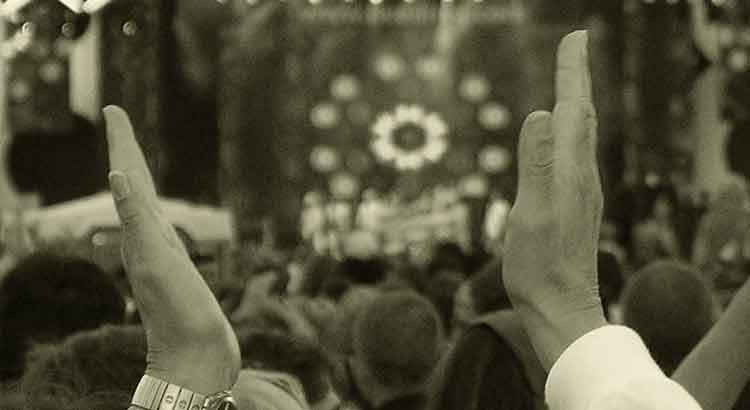
A spectacular scene! I was standing in a line, waiting. The delay allowed me to notice a small television turned on at one end of the room. On it, a fashionable fellow dressed in a bright red jacket was holding a microphone and singing excitedly. I did not know him, nor could I hear him, since I had headphones on. But he was certainly one of the most famous singers of our time, because he sang on a sumptuous stage, backed by a huge band, with fifteen backing vocals correcting his voice. And there were many, many people in the audience. However, it was none of this that I noticed. What amused me was imagining that at any moment the women in the audience would throw their panties at the man, as they usually did a few decades ago. When the camera brought them into focus, the looks on their faces confessed that the moment was near. Then I began to notice that there was something strange about that show. That I did not know the artist was not strange: I would hardly be able to identify a single face among the ten best known these days. But something did not fit. It was not the red jacket, nor the showy hair… the keyboard player? Ah! so I understood! And it was not without astonishment that I distinguished, behind the stage, the details of the environment. They switched the shot and, from another angle, I was sure: the show was being performed in a church!