
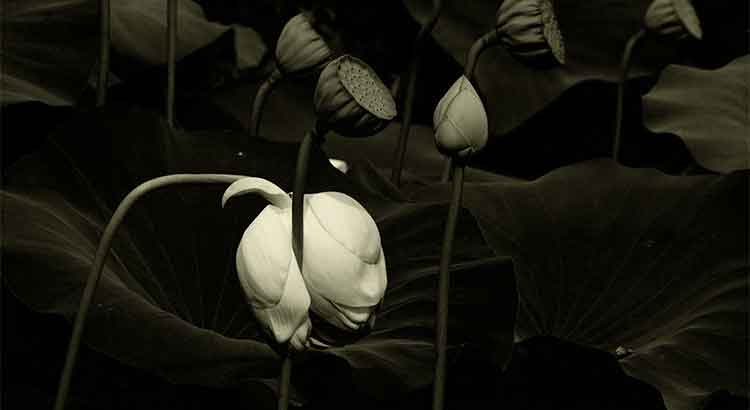
Melancholy, so frequent in artists, raw material of almost all poetic work, classified by Poe as “the most legitimate of all the poetical tones,” seems strange to my nature. I fall into melancholy, if I may put it that way, only when I am distracted by everyday issues. Taking melancholy, of course, with sadness among its manifestations. If taken as a general disenchantment—which does not necessarily result in sadness—then I am as close to it as a brother. Affliction, psychological torture, endless mental conflict: these are as natural to me as day and night. I do not know where this psychological disposition comes from, but through sadness I do not feel united to any of the great poets.
Category: Notes
It Is Necessary the Vocation of Freedom to Recognize Oneself as a Slave

In the foreground, the practical world; then, thought itself. Ties, shackles everywhere. A very limited field of action and a role to fulfill, by necessity. Wherever reasoning directs its lens, there are the claws of convenience. And none of this frightens, all of this is nothing but normality. A few—madmen—awaken, however. They manifest themselves through revolt. To them, due to blasphemy, all the ferocity with which an animal reacts when it feels threatened. And there remains rebellion, therefore, inadvisable—for those who follow advice. And for the few, the happiness of knowing they are not the majority. As Fernando Savater said, it is necessary the vocation of freedom to recognize oneself as a slave.
Stoicism Applied to Emotional Intelligence
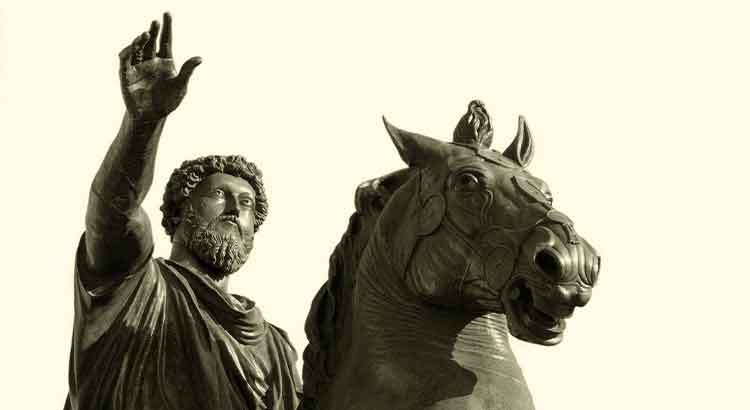
From the moment businessmen, that is, men of money, that is, men who dedicate their lives to grow financially, expand businesses, conquer markets and all the rest, from the moment these men make speeches quoting Marcus Aurelius and Seneca or, as they say, the “stoics,” then the best thing is to burn all the books at once, because they are useless and teach nothing. Marketing is perhaps the most odious of sciences because it has no scruples, because it appropriates everything that appears useful in order to sell. In a good dictionary, it would be described as the art of lying. To see conceptual aberrations such as “stoicism applied to emotional intelligence” is something that could lead to indignation or despair. It does not, however, as long as the world is seen for what it is: a ridiculous and infamous circus.
The Modern Panorama of Cultural Degradation

One cannot help but see the panorama of cultural degradation in which modern society has sunk. Along with the rise of the majority, on a higher plane placed their preferences. The result? High culture despised, reduced to the superfluous. Behavioral precepts dictated by an infamous mass psychology: everyone obligatorily sharing tastes and habits, under threat of punishment. And if access has been, as never before, facilitated, the ease has resulted in a loss of interest in what was once rare, in a loss of value. What to do, seeing this scenario? Against the impositions of numerical force, there is nothing possible: the joint scale of values escapes the individual’s field of action. But this is despicable, like everything that comes from any majority. There remains, however, the need for a cultural reaction with unprecedented violence.