
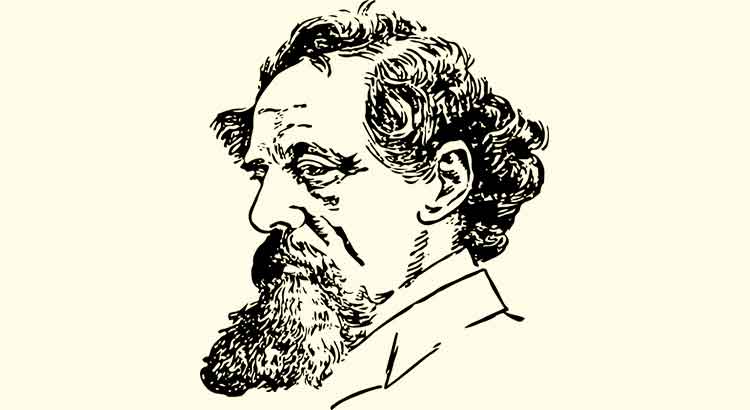
It seems to me that Dickens’ greatest achievement in Oliver Twist lies in the opening chapters of the work. Dickens introduces us to the protagonist in such moving conditions that it is impossible not to arouse immediate empathy in us. The story goes on, and the plot is handled with intelligence: all the time we realize that there were other choices, perhaps more natural, but which would undermine the relationship we have with Oliver—Dickens chooses not to tarnish his character, nor limit him to the obvious. Oliver Twist, without a doubt, from the very beginning of the narrative proves to be more interesting than a poor wretch. The antagonists, the settings, the progression of the plot: all this is very well described and convincing. From the middle of the work, however, our desires begin to be satisfied, and the narrative culminates in a planned ending that is designed to please. Here, perhaps, one could lament the absence of surprise, as one could also point out that more initiative was expected from the protagonist. As a work of art, however, Oliver Twist closes a fair dramatic arc and is therefore very good.
Gradations of Mental Manifestations

There are times when the idea is of little worth—but should be noted;—on further reflection, however, it is fair to discard it. At other times the idea seems weak, but later, re-examined with renewed breath, something valuable is drawn from it, and the weak is shown to be an important spark. Other times the mind manifests itself clearly, and the idea seems fair—from these the bulk of a work is extracted. And still other times, the mind manifests itself with such impetus that the artist, by restraining it, and not immediately focusing on what it tries to say, commits a crime against himself, and wastes what he can best extract from his mental manifestations. Attention and method are not enough; for the best use of the mind, is needed a disposition that goes against what is convenient.
Jonathan Swift’s Irony
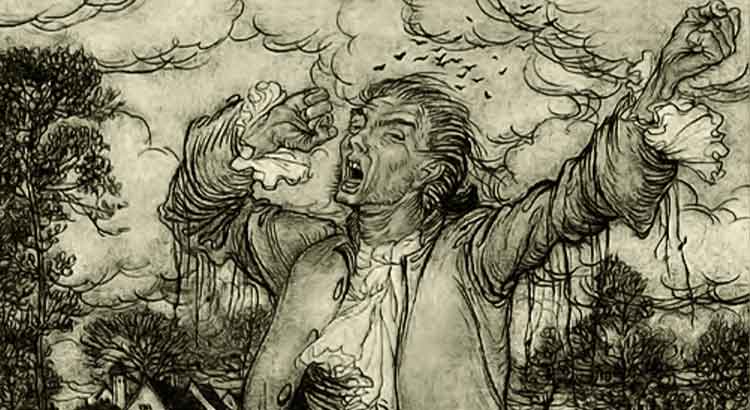
Although I greatly enjoy the pages of Voltaire and those of several of his disciples, it is those of Swift that I believe elevates irony to a truly noble manifestation. There is no doubt: it takes genius to handle irony; but this mocking irony, which provokes a malicious puckering of the lips, is not a first-rate expression of the spirit, unfortunately. Swift’s irony rarely causes this pleasant effect; more often than not, what it causes is astonishment. It is hard to find anyone who resembles him… Swift’s lines seem to repel jokes of any kind; the intelligence that understands them immerses itself in a perplexity that doubts what it reads; it is something very, very far from mockery, more like aggression. From this, we note: if Voltaire’s irony bothers many; there is no one who escapes Jonathan Swift’s irony unscathed.
The Most Enchanting of Mermaids
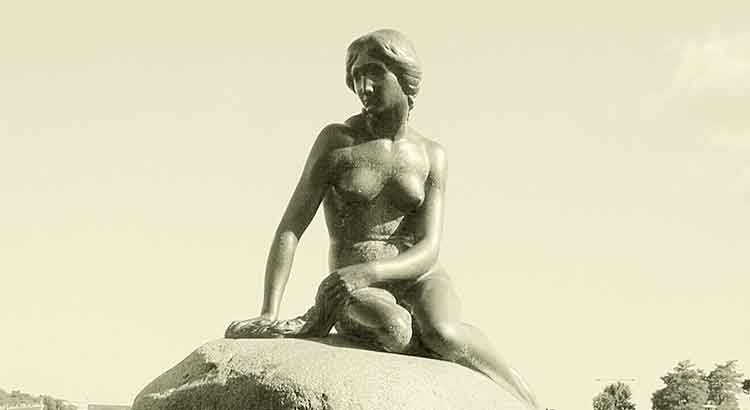
This most enchanting of mermaids, misanthropy, even seems to be fond of artists and to be, besides an object of worship, a primary source of inspiration to them. Beautiful lady: more than a mermaid, a muse! And I never cease to marvel at how useful are the barriers erected around the mind inclined to art. Vigny, and not Victor Hugo, and not Lamartine, was the one who personified the fullness of the poetic vocation. And worse for those who seek motivation among stones!