
It seems an affront, an insult to find Victor Hugo having composed more than one hundred and fifty thousand verses in just one life. One hundred and fifty thousand! It is unbelievable, a real humiliation to be confronted with this unattainable fecundity, this poetic monument coming from the pen of a single man. If we exercise mathematics, we arrive at an average daily production that only seems reasonable to someone who spends his entire life only sleeping and composing verses. Considering the whole creative process that involves ideation, planning, structuring, realization and refinement; considering that a normal mind is exhausted in the tiresome work of hooking words in the dictionary, and that therefore a long working day is unfeasible, discouraging and even counterproductive, how to justify Victor Hugo? How can we accept his poetic work, knowing that there are plays, novels, essays under the same signature? It is amazing…
There Are Few Exercises as Healthy…

There are few exercises as healthy and stimulating as personifying the immortal Bernardo Soares. In mind, talking to non-existent or distant peers, living what circumstances prevent, creating what life does not allow… all this in a practice that progressively enriches the details, changes the scenarios, expands and evolves. To do so is to open a new dimension to life, is to magnify oneself through impossible experiences, perfecting one’s reasoning, challenging oneself, experiencing whole new emotions on a plane where there are no limits or impediments. It is to finally leave the disguise of a bookkeeper’s assistant to effectively live the reality that one chooses.
The Higher Spirit, the More It Develops…

The higher spirit, the more it develops, the more it increases the distance between itself and others, complicating relationships until they become impossible. Nietzsche confessed: “My humanity is a continuous victory over myself.” And the truth is that by developing, a spirit individualizes itself, and consequently distances itself from what is considered “common.” Ordinary men meet similar people with an ease that is almost a blessing, precisely because there is a psychological and behavioral similarity between them that allows immediate affinity. For those who deviate from the norm, everything is very different. Individualization, therefore, comes at the expense of bonds; it is therefore a drawback that must be considered. Whoever withdraws from men ends up becoming a stranger; reality is transfigured for him and if, on the one hand, he evolves spiritually, on the other he becomes incapable of sympathy for men, finally considering it a victory, as Nietzsche did with his usual sincerity, to simply tolerate their closeness.
It Is Not Fair to Condemn Freud…
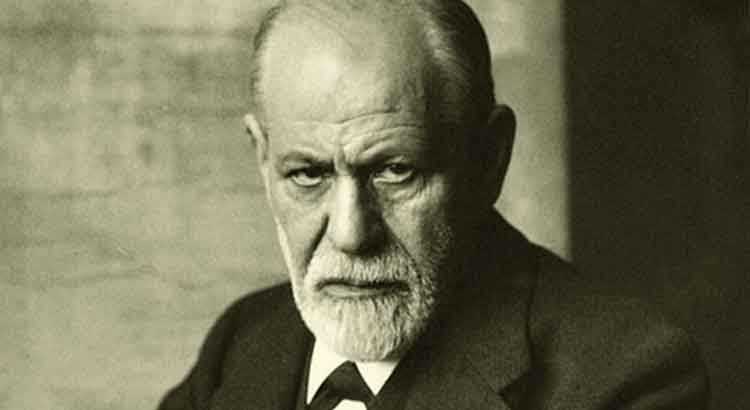
True, true: it is not fair to condemn Freud for exposing his patients’ weaknesses, for exploring them in search of justifications; after all, it would not be possible to outline solutions for them otherwise. Freud, thus, fulfilled an important task of a psychiatrist. The problem, however, and the reprehensible, is to analyze his work as a whole and find that there is no evidence of superior possibilities for the human being. Freud, not finding them in his patients, could have found them in himself, could have conceived them, even if in an ineffective will to overcome. But he did not; and, naturally, he validated in himself what he sketched as a human model. It is curious: Nietzsche is often called crazy, his “beyond-man” an absurd utopia, his will to power a delirium. And the same people who do not understand him approve Freud’s ideas. But there it is: both Freud and Nietzsche stripped themselves bare, and if in the latter we find a powerful impulse that propels us to truth, art, and above all to victory over ourselves, in the latter we are faced with a prostration before the weaknesses of flesh and mind, the fruit of lamentable spiritual misery. There is no escape: the work ends up fatally revealing the author’s inner self.