

I said, if not in an act of courage, at least of intellectual honesty, that Nagarjuna’s magnum opus seemed delirious to me. I stopped there. And now, after about two months, I come into contact with this Filosofias da afirmação e da negação (Philosophies of affirmation and negation), by the enormous Mário Ferreira do Santos, who methodically crushes each of Nagarjuna’s lines that I found so strange, and that I did not dare to guess why. Mário, in this work, leaves whoever reads it in the difficult situation of agreeing or being cowardly, if not dishonest. There is no room for neutrality in the face of the demolishing argumentation that demands respectful assent. Nihilism, skepticism, relativism, idealism, evolutionism… come out of the debate devastated, and it is impressive how in this way Mário prepares the soil on which he erects his positive philosophy, giving it the appearance of imperiousness before the intellectual currents in vogue. It is undeniable: Mário Ferreira dos Santos is a phenomenon of the highest category in western thought.
Commitment Set in Stone
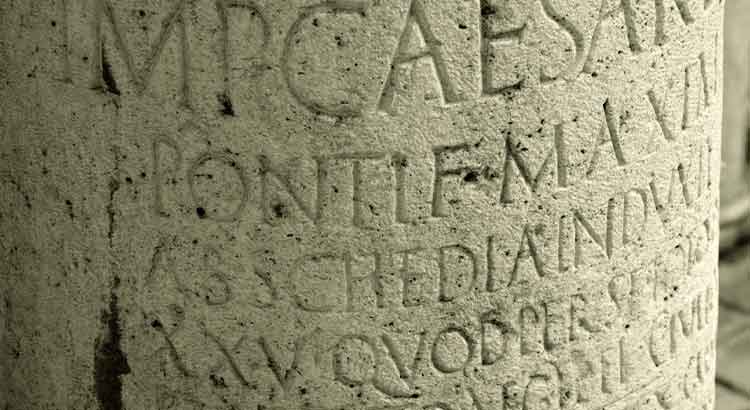
The advantage of these notes is that through them I can methodically capture and record ephemeral impressions that I experience while reading, sleeping, or composing, and that would probably be wasted. On the other hand, I already enjoy myself because I know, as I lap them up, that I am often rushing. It does not matter. I read a passage, I have an idea: this idea will become a note; this is a commitment already engraved in an imaginary stone. Analyzing coldly, I believe that these prose lines are the concretization of a rigorous method of mental utilization.
The Prose of Thomas Aquinas
Thomas Aquinas should be taken as a model by all those who write with the intention of convincing. It is curious to note that his prose, very simple, emanates an enviable brilliance due to the clarity with which his sentences reveal themselves to those who read them. An incautious person could suppose that, by chance, it would be natural, spontaneous prose. Oh, innocence! Such a result is impossible if not supported by an ultimate and constant effort for clarity. True, true: many details, many subtleties… but it delights to appreciate such precise lines, and it is admirable when one notices they are motivated by such deep meditation.
Sobre Deus, by Mário Ferreira dos Santos
What Mário Ferreira dos Santos does in this work entitled Sobre Deus (About God) is remarkable. After a brief exposition on the scabrous subject, there follows a very high-level debate in which simply the best arguments for and against the existence of God are confronted. Mário, although he exposes his personal position on the issue beforehand, lets his opponents speak freely. The result is, above all, an enlightening work, whose outcome fatally exposes the terrible contradictions into which those who deny the existence of God throw themselves, that is, the existence of the supreme, eternal, self-sufficient, and indispensable creator. Logic dictates that we must admit it. But there is more, there is a very interesting effect resulting from Mário’s intellectual honesty and wisdom: there are no stronger, more complete and convincing arguments against the existence of God than those raised by Baron de Holbach; and these permeate the work unhindered, free to show their potency. It so happens that when confronted with the irrefutable logical proofs offered by the great scholars of the problem, the logical proofs that demand the existence of a creative principle and require of it the qualities that have generated so much controversy for so long, Holbach’s arguments lose their force, even though they are not being directly refuted. What an effect! Logic imposing itself sovereignly! Everything that could be said against God is said, and said emotively, eloquently, bringing together enough aspects to make no soul indifferent. And yet, the argument fails completely in the face of close examination…