
The future is a hypothesis; concretely, it does not and will never exist. To understand it is to orient oneself. Possibilities open up to the man in a fleeting lapse and continually demand immediate action to materialize, until the day when they all close forever. Meditate, and thought points to the best path: then it is to act, or annul itself in uselessness.
The State of Mind That Favors Good Manifestations…
The state of mind that favors good manifestations is not reached in a sudden burst, it is a long, daily and fragile construction, extremely fragile… One slip, and one returns at square one. After a long effort, it becomes commonplace in the transformed daily life what once seemed impossible. Stumbling, throwing oneself back to the previous paltry reality, what one experiences is an affliction that weighs heavy on the back and smashes the face against the ground…
Perhaps Mozart Was the Most Genuine and Genial Artist
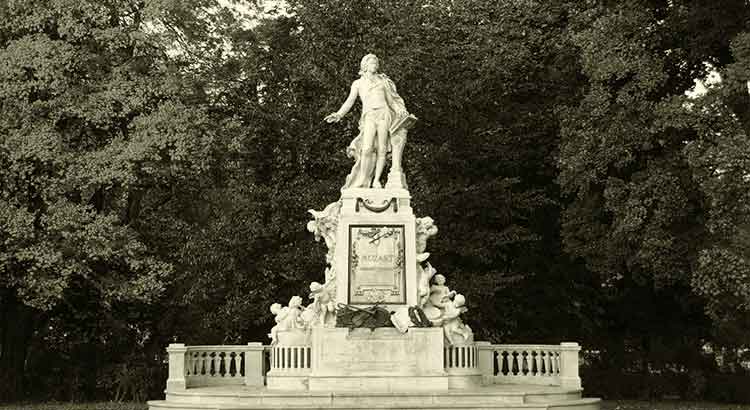
Among all of them, Mozart was perhaps the most genuine and genial artist. It is absolutely impressive to see the vastness and quality of his work, and if we consider his modest three and a half decades of life… There seems to be no one who comes close to him. A work so vast, so beautiful, so touching and so powerful seems inexplicable and impossible. An artist of inexhaustible and ever-excellent manifestations: the Mozart of the sonatas captivates, the Mozart of the concerts enchants, the peerless Mozart of the Réquiem amazes. How is this? how from a single man? In Mozart’s case, having the questions more than satisfies…
A Top Orchestra Is Almost a Cultural Salvation
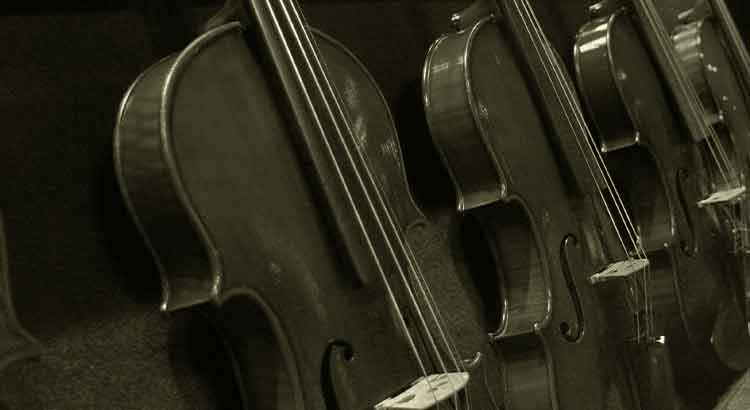
It is indescribable the feeling of seeing, in color, a first-rate orchestra playing. I say see, and I do not know if I should have said feel. The expenditure of incredible sums to maintain it is justified because a top orchestra, depending on where it is located, is almost a cultural salvation. When one feels it, one concludes: there is hope. To witness, simultaneously, dozens of men who dedicate their lives to art; who, after long years of study and intense practice, train, train, and train to, in a very short presentation, transmit to those who see it the genius of noble and immortal spirits that have crossed the centuries. To notice the subtlety of synchronous, precise, and feeling-laden movements; to be silent and let oneself be guided by a sublime melody; to experience a direct contact with something beautiful: an experience of this nature morally elevates the audience that lives it.