

Capitalism has imposed a behavioral philosophy that demands efficiency and professionalism in daily life. Anything different from this is abnormal, repulsive, contrary to the current dictatorship. It is necessary to answer e-mails, messages, return calls, and always and for everyone have the fake smile of a salesperson. A conduct based on the interest and concern with one’s own image—the others, always the others, the possible clients of an individual transformed into a company. From this comes the suppression of individuality: the action submits to what is convenient, annulling one’s own will. Practically, the being loses the recognition of himself, and with it the notion of importance and dignity. There does not seem to be a solution that does not start from complete exhaustion, which is converted into indifference and contempt for the world and gives rise to a behavior that horrifies the common person.
Tag: behavior
Democracy: the Factory of Cowards
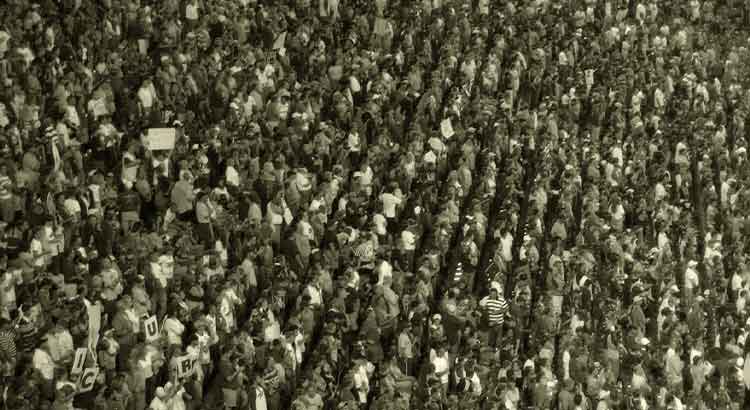
One of the most detestable side effects of a democratic society is the establishment of the veiled judgment that if the many are against one, the many are right. There is no more efficient process for a factory of cowards! From the moment a child is taught that to assert his opinion or will over that of another, it is enough to convince a third party to support it, he learns to operate cowardice—knowing its practical advantages over honor, an essentially individual virtue. If we think of whole generations brought up in this way, that’s the end!
The History of Great Men Who Stood Out From the Crowd

It has been said—by Carlyle?—that the history of mankind is the history of great men who have risen from the null crowd that composes it. From this, the modern tragedy: the democratic social structure simply restrains the rise of great men, putting in their place abject demagogues, slaves to the popular will. To rise and achieve recognition, a modern man must become a spokesman for the stupid majority, setting aside his individuality to become a circus entertainer, a crowd-shaker. It is precisely the distinguished who cannot rise, this possibility being exclusive to those who resemble as many individuals as possible. The failure!
Nostalgia of the Dueling Days
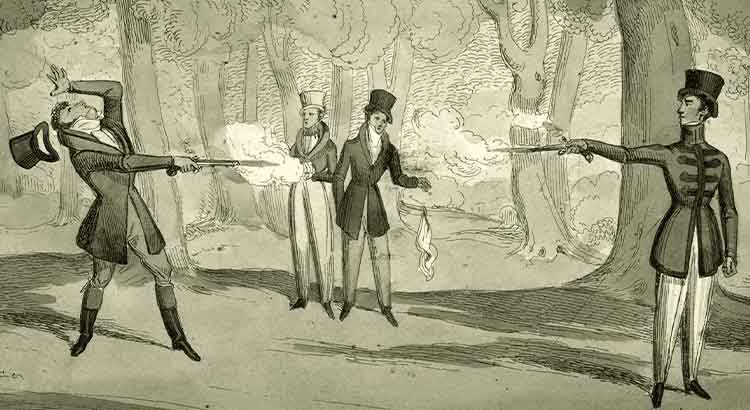
Today, an imbecile feels his vanity scratched and, in revenge, sneaks in to harm another by waging a hate campaign against him—that is, by inciting others to hate him; by rallying a cowardly majority. A few centuries ago, the offended, the truly offended, could resort to defiance, refining it if he left the choice of weapon up to the challenged. If the offended refused, he assumed to be a coward, and the honor of the offended was automatically redeemed. The duel was an instrument that put offenders in a very bad situation: the offended had only to win. If he lost the duel, he emerged as a brave man; if he won, he had his moral damage repaid. How everything has changed! In this age of cowards, dueling on equal terms has become literature: there is no one who challenges, and no one that has the courage to accept a challenge. In those days, when the possibility of a duel was evident, people respected each other more.