

It is incredible to note the acuity of some of Jung’s observations when applied to general conduct and its natural reflexes in a society. When we perceive that there is a search for external validation operating incessantly and encompassing even strictly individual acts, we understand why there is such a high degree of submission to the environment—this one, considered en masse as the sovereign arbiter. From this to the public demand for conduct against one’s will, even if disguised, under penalty of jail or lynching, does not take much time. And the reflexes? How predictable! The social man has no personality; he is a puppet of the collective behavior. All it takes is for one imbecile to get up on a stage, convince a claque, and then the endless mass of sheep, out of fear and need, will be embracing him.
Tag: behavior
Maturity Eequires the Experience of Deviation

I said yesterday and I continue with the idea: if someone gave me, at the age of fourteen, a nuclear bomb, I guarantee that I would blow it up. No doubt about it! I would blow it up, at the very least, to see what would happen, out of curiosity about the explosion. But there it is: nobody, at the age of fourteen, receives a nuclear bomb as a gift. The other bombs—all the ones that passed in my hands!—I exploded, and the ones I did not have, but I saw, worked to get them, and took care that they exploded too. Today, I have no interest in bombs. The bad elements of whom I learned and taught, also not—mostly. To me all of this is quite natural. Maturity demands the experience of deviation, of libertinism, of transgression. More than that: malice is a discipline of practical classes. But what am I getting at? I said maturity: one does not mature at sixty. After an age, a man limits himself to being what he is.
Contrast of Generations
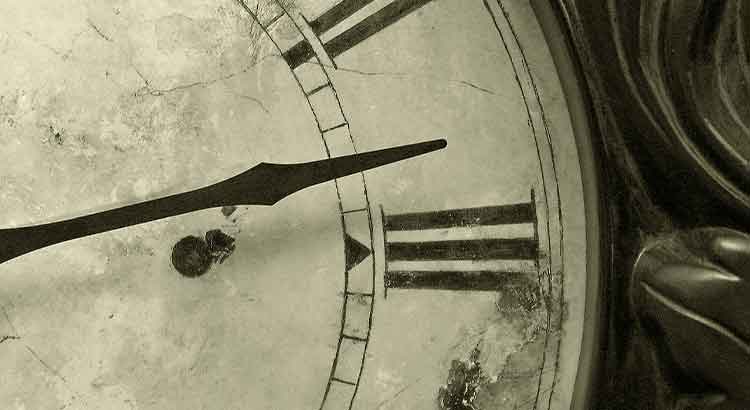
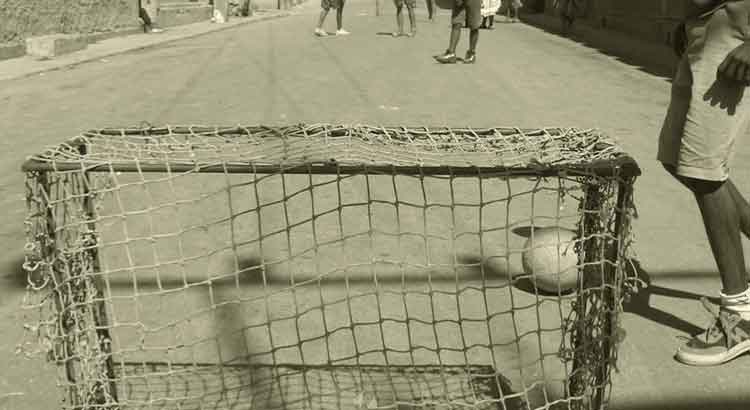
The 21st century has perhaps brought about the most drastic behavior change in history, and the evidence for this is the contrast between recent generations. I remember childhood and youth and compare it with today’s: the young man I was appears to be of another kind. But funny! The young man I went witnessed, living, this change. What I experienced, on the street, practically does not exist anymore, and even for me it no longer exists. However, the school I was a student of from an early age and, at fourteen or fifteen, gave me the diploma after demanding all the most extreme manifestations of licentiousness, making my blood experience adrenaline peaks that I will never feel again and training me for life, seems dead. I say this because, after a certain age, one no longer enters that school: age brings facilitators that make real learning impossible. And today’s young people, locked up, protected from the emotions and dangers of the street, grow up ignoring it. But here is the biggest contrast: at twenty, I saw myself a rascal tired of the world; at twenty, a young man today finds himself unfit for the world and sometimes—oh, tragedy!—thirsty for experience.
The World That No Longer Exists
William Faulkner, in an interview for the Paris Review:
There were many things I could do for two or three days and earn enough money to live on for the rest of the month.
What! Two or three days! I reread the interview perplexed. Just imagining that less than a century ago it was possible to live the month painting houses for two or three days, the smile disappears from my face. Two or three days! And today it is necessary to work even when one does not work. I practice mathematics: how much does a pound of meat cost? I limit my diet, I stick to the essentials: three days a month does not even pay the week! And the worst thing is to see the obvious: there is no choice. It is accepting the energies and the time drained every day for years, decades, to then look back in regret…