
When we read some economists, economics seems like a problem so logical and so simple that it really scares the stupidity of those who govern it in the real world. Today, there are more than enough historical examples of economic measures that have proven to be fruitful or disastrous, so that, in the vast majority of cases, or rather, as far as macroeconomic guidelines are concerned, there could be no doubt about how one who intends prosperity should act. But then, theoretical pragmatism seems absolutely inapplicable to reality, in which the most diverse interests, some mean, some naive, perverse or irresponsible, are placed in the foreground, to the detriment of that already weakened and distant objective that should guide all economic measures. The conclusion is only one: the human element makes any equation unfeasible.
Tag: behavior
The Ostensible Culture War in Force…
The ostensible culture war in force, which for decades has tried to contaminate practically all areas of knowledge in a gradual work, already seems to indicate that, in the future, a serenity in analyzing history will be something of a miracle, if not nonsense. Such a phenomenon can no longer be ignored, and by no means constitutes an isolated act in today’s cultural panorama; and even if there is an attempt to deviate from it, it goes inconveniently knocking on all doors, invading homes and imposing itself before the individual. What is to be done? Just as it is convenient to immunize oneself against such agitations, there are cases in which doing so seems like flirting with dishonor. To abstain from the verb, in the current situation, is to allow the lie to be transmitted to the future as history. Lamentable…
Honor Claims Civil Disobedience
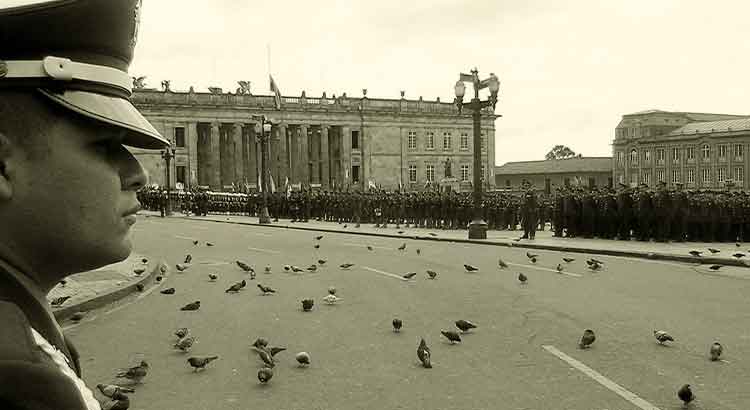
There is, as Thoreau says, a time when honor claims intransigent civil disobedience, even though the punishment for such behavior is jail or the gallows. This thing called democracy perhaps sums up its value in having replaced declared tyrannies, or rather, in having the knowledge of the latter made “democrats” out of many men of valor. So we see that, in practice, tyranny has done nothing but change its name. It is impossible not to think of Kafka when we confront such democracy with the solitary individual. If we think, for example, of the immense oppressive power of the State machine or, more specifically, of the enlightened ones in robes, who enforce whatever they want, we see on the other side a nothing on his knees, tied up and under the double threat of the whip and the gag. Yet now, in a mix of Kafkaesque plot and nuances of Orwell and Huxley, oppression is delivered in packages as affable as they are false. To understand it and accept it willingly is to throw honor and the faculty of thought in the trash.
There Is Nothing More Ridiculous Than the Importation of Cultural Garbage…

In the contemporary West, there is nothing more ridiculous than the importation of cultural garbage produced by the United States by countries that, in doing so, humiliate their own tradition. Henry Adams correctly predicted that nothing good could be expected from a rising civilization that has been denied a decent cultural-historical basis. And there it is… All the nonsense conceived in America, with the impressive speed of the digital age, is instantly exported to the rest of the West, which seems to delight in this vexing packaging of an English corrupted by the absence of British tradition. As for Brazil, it is better not to say.