
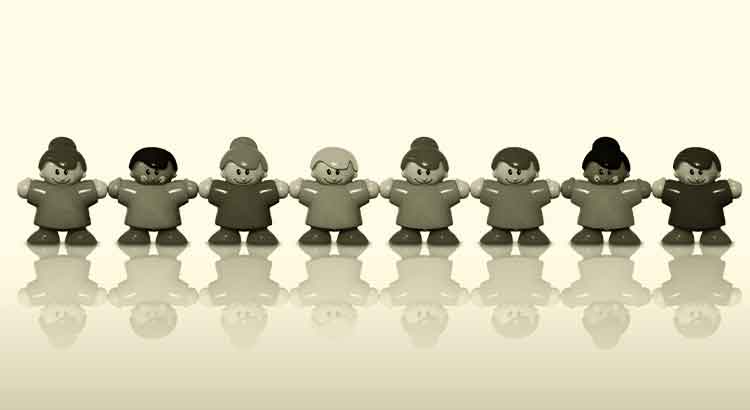
It is curious to note the utopian character of the unique possibility of social harmony. This would basically imply individual freedom and protection against attempts to violate it. And it is impossible because the same individual who lacks freedom manifests an uncontrollable impulse to violate the freedom of others in order to fulfill his desires. This impulse, of course, is lessened by increasing the distance between individuals, freeing one from the presence of the other—which is not possible in modern overpopulated cities. It is necessary, then, for them to work it out, or for someone to force them to work it out. But an impasse arises: to fully tolerate the other is anarchism and chaos; the opposite path is the suppression of freedoms. From this, it can be observed that living together necessarily creates imbalance, and some social stability can only be achieved by prohibiting, controlling, preventing, which ends up causing the natural reaction of the one whose freedom has been violated, which is the same one who needs to impose himself, invading the freedom of others, and which represents the unquestionable justification for prohibitions and controls. Sociology is the end!
Tag: behavior
The Full Objectivation Operated by Modernity…
The full objectivation operated by modernity and the subsequent indoctrination of the masses to this peculiar way of looking at reality has produced individuals lacking a most important mental faculty. Trained to consider certain hypotheses forbidden, the new minds already grow up with a deficit of possibilities, which are torn out at their roots. More and more it seems obvious that the greatest misery of this age is that it has objectified the human being, and therefore destroyed his transcendent dimension, reducing him to the limited and corrupted character of ordinary matter. The consequences of this terrible night of the human spirit range from dehumanization to dumbing down, from cultural destruction to moral regression, from chaos to the vacuum that has become characteristic of it. How was it possible to reach this point? Once again, it seems right when Tolstoy says that there are historical circumstances that seem defined by a greater force—we are left, as always, with astonishment and hesitation in conjecturing the whys…
The Flower With Black Petals

Let us exercise the imagination: a man, after much meditation on suicide, after careful consideration of all the torment he suffers, concludes that it is absolutely unjustifiable. He goes to a friend, with the faint hope that there is something he is not seeing, that his conclusions are based on an unknown error. The friend takes his time and begins to talk to him about the singing of the birds. Is it possible for the unfortunate man not to think it an insult? Let us now suppose a monk returning on foot from a long silent retreat. A lady comes up to him in the street and says she is afraid that it will rain and wet her clothes hanging on the clothesline. There is, again, a contrast so sharp that it seems to offer laughter as the only response. Well then: from this very banal contrast, is born a flower with black petals called misanthropy.
The Emissaries of Good Sense
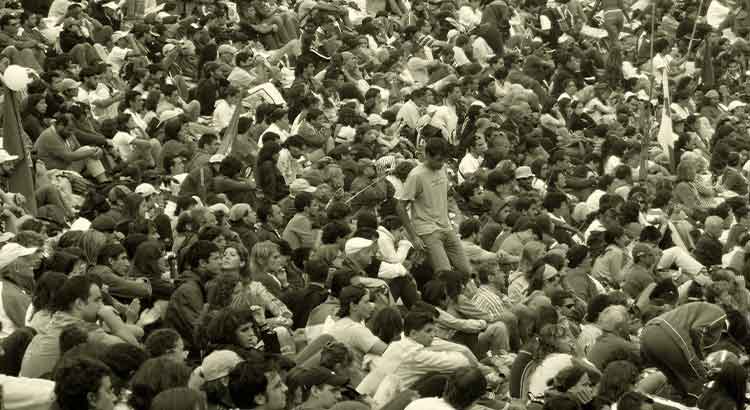
So abundant and so ancient are the narratives that thoroughly expose the perverse and regular oppression operated by the majority against isolated, helpless individuals, who suffer like martyrs never to be unredeemed by history, that it seems absurd, even today, that majorities are considered to be emissaries of good sense. From this clamorous lie, one would expect men to rid themselves, even if out of necessity or shame. Curiously, the nonsense persists and grows stronger. How to justify it? Explain it, Carlyle! How to reconcile it with your theory of the burial of lies? It seems that, in this world, injustice does nothing but change its mask occasionally.