
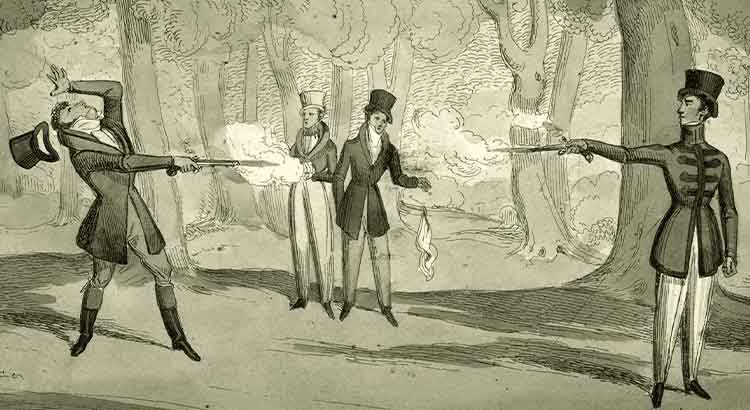
Today, an imbecile feels his vanity scratched and, in revenge, sneaks in to harm another by waging a hate campaign against him—that is, by inciting others to hate him; by rallying a cowardly majority. A few centuries ago, the offended, the truly offended, could resort to defiance, refining it if he left the choice of weapon up to the challenged. If the offended refused, he assumed to be a coward, and the honor of the offended was automatically redeemed. The duel was an instrument that put offenders in a very bad situation: the offended had only to win. If he lost the duel, he emerged as a brave man; if he won, he had his moral damage repaid. How everything has changed! In this age of cowards, dueling on equal terms has become literature: there is no one who challenges, and no one that has the courage to accept a challenge. In those days, when the possibility of a duel was evident, people respected each other more.
Tag: behavior
Society Has Become Radically More Cynical
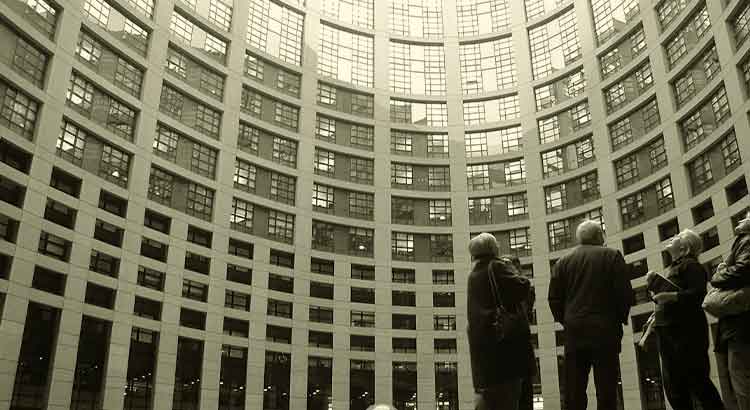
With the democratization of the West, the advent of the press, and especially marketing, society has become radically more cynical and its means of oppression even more perverse. The State has become stronger than ever and has expanded its methods of social control, assuming the position of God and waging war against the manifestation of the individual, reducing him to nothing and taxing him as a criminal if he opposes its tyrannical and immoral impositions. Censorship has become prior, condemnation veiled, defense mechanisms have been annulled by mass psychology—all this operated by an authority based on a false and hypocritical foundation that only grows. Cynicism and lies have never been used so effectively as instruments of domination and power.
If There Really Is a Hell in Which Hypocrites Suffer…

If there really is a hell in which hypocrites suffer, let modern society know where it will unleash its word and implement its conventions. Hypocrisy is the substance of this so-called marketing age and is ingrained in the very core of its foundation. Without hypocrisy, there are no social relations anymore: it is by it that modern man displays his intelligence and good manners. “Age of marketing”, and hypocrisy is a beautiful definition of marketing. The world would be more honest if the good worker would say, “I work with hypocrisy management”. But of course he never will. The good worker cannot even be honest with his fellow workers, with his neighbors, with his friends, with his family… Can hell hold so many people? On the other hand, there are two paths for the modern non-hypocrite: (1) operate a total annihilation of social relations or (2) live normally, under the penalty of being widely hated in all circles, if not unemployed or beggar. Outside of this is history…
Friday!

Something absolutely impossible for a man of other times would be to understand what goes on in the chest, veins, and mind of the overwhelming majority of modern men when the calendar declares it to be Friday. Friday! Wonderful Friday, when the sun rises and heralds the liberation of millions of souls! And modern man, bathed in this magnificent blessing, is overcome with an exhilarating and indescribable euphoria. Once a week he experiences an outpouring so strong that men of other times might go their whole lives without feeling anything like it. Tears, jubilation, screams, and gratitude to the heavens! Smiles on the face and the chest wanting to explode! On Thursday there is never any hope, it is as if the slave had already been working for long exhausting years, tired, unhappy, depressed, and aware that he would have to spend the rest of his mediocre and frustrating life this way. Then Friday! always unexpected Friday! the full proof that God exists and life is not so bad! There is no way that a man of other times would be able to understand it—and, probably, neither will those of the future, since the secular world no longer needs the luxury of a Christian calendar…