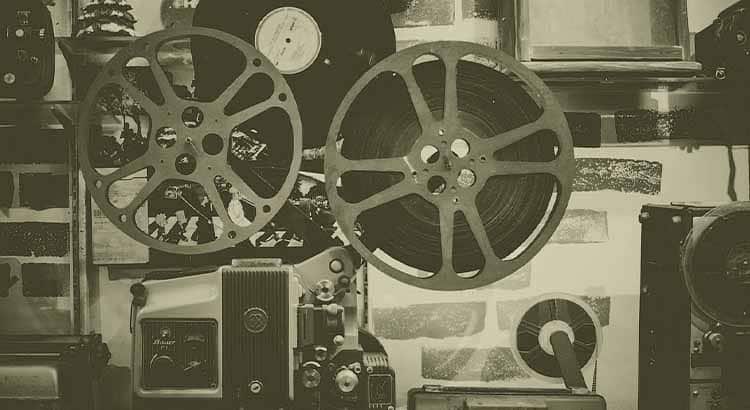
I believe it was Faulkner who once said how much writing for cinema undermines an author’s creativity. Of course, Faulkner is more authority than me to talk about it, but I do not think cinema just mines a writer’s creativity. Writing for the cinema, in my case, was of profound importance. For those who have never read a script —and who do not miss much: — the cinematic text, when well written, is of a frightening objectivity: the scene describes accurate and only what is necessary to be intelligible. There are hardly adjectives, a character never presents himself with “gaze wandering through warm daydreams”, and the windows are never “sad and gloomy, crossed by a faint light that faints in the dim light”. It is true, it is true: there is less art in a movie script than in Tolstoy. However, writing for the cinema forces the writer to ask himself: What is the purpose of this scene? What is the function of this object, character or inflection in the scene? Is this stretch really necessary? What, first, is the goal, the message of this film? Does the scene I am writing contribute, in some way, to the plot? Has any direct connection to the main message of the film? Can the film be summarized briefly in the three acts of the Greek tragedy? Does the climax convince? Is it well-supported? Is there dramatic and psychological justification for the actions of the characters? I could keep quoting, but that is enough. What I think, therefore, is that this kind of question seems fundamental to any artistic text and, humbly, I believe it is necessary to do them methodically. Faulkner may not say the same, but I particularly give thanks to the cinema for having them ingrained in my veins.
____________
Read more: