

I believe it was Carpeaux who noted that the great genius most often lives hindered by circumstances. And even if he does not want to, even if he resists, a force seems to set him in motion, prohibiting unproductive inertia. Thus we have the most common profile: an individual neither poor, nor rich; neither totally deprived of means, nor blessed with too many facilities. He takes action; he does it because he needs to, because he feels pulsating a desire and a need to surpass himself, to elevate himself, which is nothing more than a flat refusal of his actual conditions. From this, he acquires an unbreakable motivation, ready to go to the ultimate consequences to achieve what he has set out to do. He adapts as best he can to the momentary hindrances and goes forward, always forward. Then, all this complex set of circumstances that Pessoa talks about, especially those of the environment, makes his spirit exceptionally vigorous, so that he is finally benefited by the necessary—as Pessoa also notes—”minimal episodes of luck”. It is a very interesting phenomenon, and one that makes one think…
Tag: literature
Just as Machado’s Irony…

Just as Machado’s irony, badly imitated—and so imitated—is irritating, so is this simulated lightness in poetry, this simplicity that pretends to be profound, this delicacy that, when it is not the authentic expression of a temperament, is annoying. In short: Drummond and Bandeira. Perhaps the greatest curse of success is its offspring, that is, the imitators. How embarrassing is the technique when exposed without the original varnish! And to see all these cheap copies proliferating, making ridiculous the very creativity that engendered it… Directly, it is true, the originals are not tarnished; however, it is difficult to say that any artist would rejoice in forgeries. There remain antidotes, and none seems more potent than inserting absurd, repulsive eccentricities into one’s own art, which no imitator will have the courage to appropriate.
Marriage Is the Death of Lyric-Love Poetry

Verses by Byron:
There’s doubtless something in domestic doings
Which forms, in fact, true Love’s antithesis;
Romances paint at full length people’s wooings,
But only give a bust of marriages;
For no one cares for matrimonial cooings,
There’s nothing wrong in a connubial kiss:
Think you, if Laura had been Petrarch’s wife,
He would have written sonnets all his life?
There are truths that are too unpleasant and deservedly avoided. There is no denying it: marriage is the death of lyric-love poetry. Or, rather, it ends the latter the instant the desire is consummated. To exist, it is necessary that the poet regrets not having what he covets, that is, it is necessary that something hinders the realization of his fantasy. The verses will sprout only as long as the idealized object is unavailable, and therefore allows itself to be painted with extraordinary form, something that will never occur if it proves to be a real entity. And here we go: Petrarch’s love gave birth to verses because it was unrequited,—an obvious conclusion that needs no biographical support,—as it occurred and occurs with all his peers. Whatever one may say, this is the truth: the poet capable of fulfilling his own will will hardly ever make “love” verses.
Demons Became a Masterpiece…
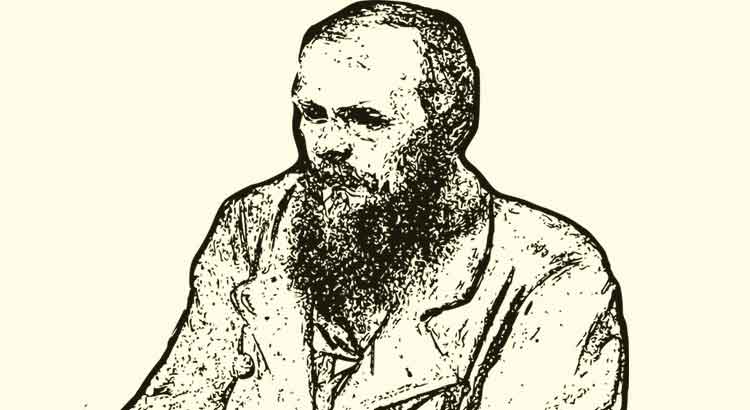
It would be interesting to analyze how Demons became a masterpiece despite being conceived by Dostoevsky for ostensibly pamphleteering purposes. It is a real feat that this has happened, since the most likely destination of a work motivated in this way is the trash can. It is impressive not only Dostoevsky’s ability to give scope to the episode, but also the sense of urgency and importance only possible in a true visionary. The work, therefore, ended up being strengthened by the same qualities that ordinarily foul it up. More than a real, complex, original and profound plot, it came out as a denouncement and a prophecy, being equally valuable to philosophers, psychologists and historians. Very few are the works of which one can say the same.