
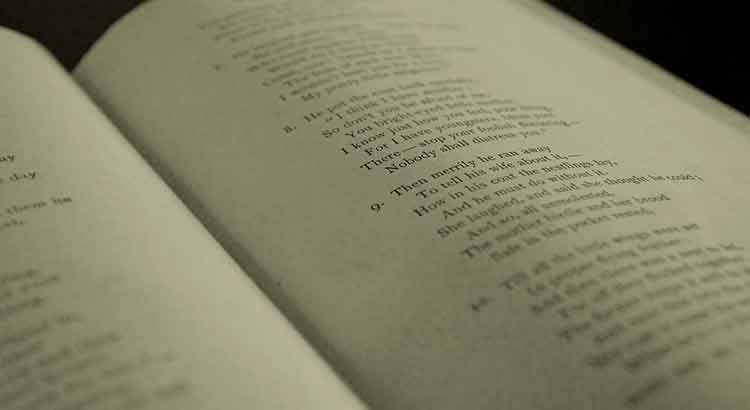
Metrics and, especially, rhythmic regularity deliver an effect that is difficult to match through other expressive resources in poetry. They both seem to stroke and fulfill the demands of the brain as it concentrates on unraveling the meaning of the words and interpreting the syntactical variations of the verses. In regular poetry, small rhythmic variations, drawing attention to themselves, sometimes succeed in emphasizing words and enhancing the expressiveness of some passages in the poem; however, when the rhythmic pattern is ostensibly broken, the disturbance caused seems to divert the mind’s attention from what it should concentrate on—the effect, in short, is aesthetically unpleasant. The rhythm, once grasped, generates an expectation for its continuity—and it is difficult to satisfy the brain by denying what it seems to ask.
Tag: literature
An Enemy of the People, by Henrik Ibsen
Perhaps this play is a little too obvious. But it is worth asking: how not to be obvious when dealing with characters such as the people, the politicians, and the press? Figures as predictable as regrettable… The plot holds no surprises: an honest man, a free thinker, is crushed by the abominable tyranny of the masses, that “satanic compact majority”, supported by the opportunistic collusion between the abject powerful and the vassals of public opinion—those fearful of rejection. Dr. Stockmann is, like all higher spirits since the repugnant ideas of the philosopher of Geneva took root in the West, the victim of opponents so numerous that it is convenient to classify him as absolutely alone. There are no neutrals against Dr. Stockmann: there are cowards who connive by their silence and aggressive cowards who stone him, camouflaging themselves “under the cloak of the crowd”. Too obvious… The message of the work, however, is irrefutable: anyone who opposes the prevailing tyranny will be hunted to death! Perhaps the title of the work would sound better, instead of “An enemy of the people”, as just “The enemy”. I change my mind: perhaps the play’s brilliance is precisely its obviousness: for it shows what, as a rule, happens to real-life Stockmanns—with the exception, of course, of the play’s fifth act, which is overly optimistic for someone reading it more than a century after its publication…
Whoever Targets Big Enterprises, Has to Start With the Small Ones
Whoever targets big enterprises, has to start with the small ones. This is the only way to prepare for what one aims. Planning has this advantage: it shows the difficulties beforehand, and also points out the path to follow. In literature, the candidate novelist does well, first of all, to specialize in smaller, autonomous constructions that contain simplified dramatic arcs. Small units, direct themes, structural simplicity. In his head, the characteristic unpretentiousness of one who knows himself learning, who knows himself at the beginning of a long process. This is how, with time, arrives the skill in working with speed, in the representation of diverse states of mind, and in the impression of powerful dramatic effects. It comes after many tests, many failures, and many lessons. To prepare for big enterprises, it is wise to continually strive for the elimination of luck.
Sterility and Merit

In Symbolism, it was sterility seen as a virtue and artistic choice. However… how to say? It is natural in the one who employs all his spirit in art, who devotes himself wholly to art to produce it in abundance. Fecundity is, to a great extent, dedication. In the Symbolists, it was not an isolated case of slacking off, or of giving oneself over to depravity. Let us meditate: how is it possible to value the artist who does not value himself and destroys himself in very low habits? the artist who despises his talent and spends most of his time in petty activities? It is true: there are cases in which the work speaks for itself. But the sterile artist limits himself: his work, though strong, lacks breadth, multiplicity—qualities that would probably be attainable through effort. From all this, the conclusion: a genius becomes what he engenders and, ultimately, his dimension is also conditioned to his effort.