
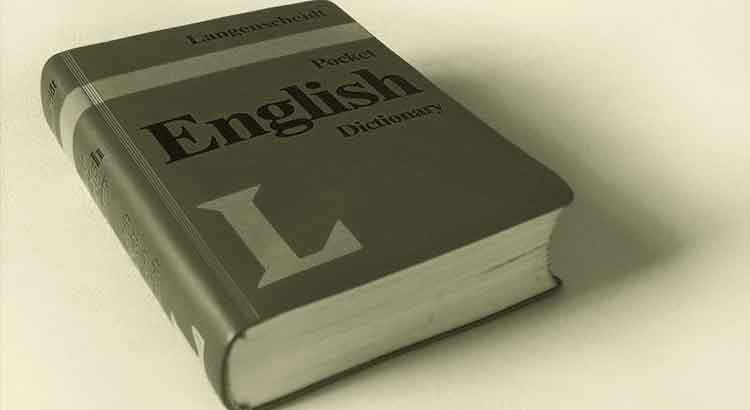
There is no doubt that the simultaneous movement by the intelligentsia towards the English language and away from Latin and French was and has been deleterious to the Portuguese language. The fact is obvious and it happened less by choice than by necessity. However, today it is possible to see how much was lost. If we reflect on the vehement condemnation made by grammarians of yesteryear regarding the Gallicisms that invaded the Portuguese language, we get the false impression that French was contaminating the vernacular, when, in fact, it had a mostly enriching effect, as can be seen in perhaps the greatest prose writers of the language: Eça, Camilo and Machado. The French influence, then, now non-existent, did more to confer beauty to the Portuguese discourse. As for Latin, driven out of schools and universities, the lament is even greater. There is no need to list what the Portuguese speaker loses by giving up the study of Latin, since many have already done so uselessly, such as Napoleão Mendes de Almeida. The fact is that the average intellectual today is formed with not only vernacular but also cognitive deficiencies: he reasons worse due to difficulty in articulating reasoning, due to an inability to order discourse—something that could be prevented by studying Latin. And if we turn to the aesthetic loss, so considering that English is the substitute for Latin, the situation is even more pitiable. What to do?
Category: Notes
At Some Point in History, the Press Discovered…
At some point in history, the press discovered that it could sell truths—and how much it could profit from doing so. Then, realizing this new potentiality, it took it on with gusto and, over decades, gradually intensifying it as intensifying it proved more and more profitable, it became a tool of systematic manipulation. For a while, nothing seemed able to stand up to it, to diminish its sovereign power; and it deluded itself that it would always be like this. What has happened in the West, then, in a sudden way and notably in Brazil, is something simply delightful to observe: this whole scoundrel empire, this conglomerate of lies, is now targeted by the fury of the very masses it has manipulated and seems doomed to collapse. It is a privilege to notice it in real time! And who could have predicted it? After many years of lying, lying, and lying, to the point of doing it with an astonishing shamelessness, overstepping all limits and insulting the intelligence of those it deceived, it has fomented a very violent reaction against itself that did not warn when it would burst. It is true: it is still too early to risk the final chapters of this story; but, for now, there is no way to contain the stretching of the same smile that lived on Voltaire’s face.
The Jungian Approach to Dream Interpretation…
As with everything else, the Jungian approach to dream interpretation is much more interesting than what is generally done in psychoanalysis. Starting from the same necessary principle that one must find meaning in them, but not restricting himself to an exclusively causal interpretation, Jung opens himself to an infinite horizon of possibilities. An attentive analyst is quickly impressed by the disparity between the dreams of the same individual, from the lucidity of manifestation to the almost always discrepant content, sometimes based in the present, sometimes in the past, sometimes in fantasies, and so on. There are dreams in which the linearity makes understanding easier, while in others there is a strange superposition of disconnected scenes, if not abstract images and a complete absence of a logical link. It is not rare to have the sensorial certainty that such and such event occurred in a dream, without having retained pictorial elements; as well as the memory of loose dialogues and speeches, in manifestations that defy reasoning. Not to mention dreams that are amazingly connected to events that take place in the future. Jung, noting all this complexity, is right in approaching each dream individually and repudiating the attempt to box them all into a “manual of interpretations”. It is true that the psychologist, acting in this way, most often finds himself in the dark; but such humility, not to say courage, can occasionally pay off.
There Is Something Truly Brilliant About Gilberto Freyre

There is something truly brilliant in the way Gilberto Freyre constructs his works. At first, the unclassifiable character of all of them is impressive, that is, the character of a mixture, of works devoted to many, and not only to one science. From the preface, one can already notice an impressive heap of contrasting references, which instigates curiosity about how they will harmonize in the following pages. Then Gilberto Freyre begins his prose, interweaving anthropology and sociology, synthesis and reports, passing from an inventory of customs to historical events, penetrating into the innermost recesses of his characters, and all this pile up slowly forms a complex and vividly colored picture that hardly a purely sociological, anthropological or historiographical work would be able to match. It is as if he methodically changes the shade of the paint after painting several paragraphs with a single color. After many pages, when it is already possible to observe the whole, we feel before a work with historiographical precision, but painted with literary subtlety in the construction of the characters, in the minuteness of details, in the representation of the sociocultural environments that served as background for the historical period approached. It is clear that his works, constructed in this way, cannot please those who are crazy about the objectivity of facts—but these, knowing them, will never be able to interpret them.