
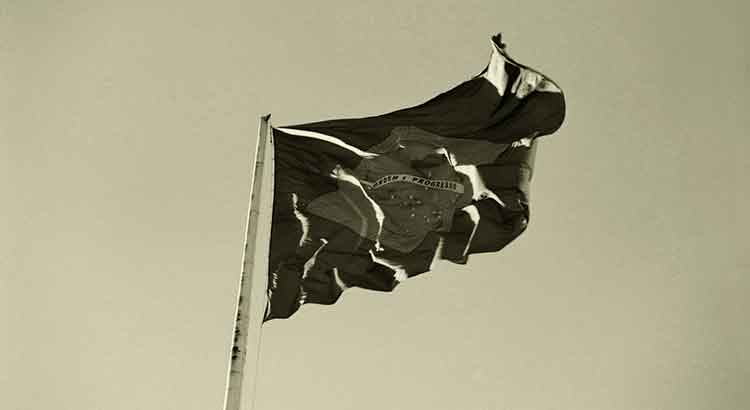
In recent years a drastic psychosocial change has taken place in Brazil that is bound to have long-lasting effects and that, for now, are of imponderable extent. Driven especially by politics, and contrary to what is happening in the rest of South America, the phenomenon would delight both Gilberto Freyre and José Maria Bello. Only a blind person would not notice it when analyzing it sociologically in light of the last decades. A war of values, above all, is underway, started by a spark that seemed insignificant but which generated a chain effect and whose victory now seems a mere matter of time. The dominant intelligentsia, which had established itself over decades of work, at exactly the moment when it seemed sovereign and invincible, saw a reactive movement emerge from where it never expected to see it, a movement that hit it with unforeseen violence. Today, we see it in despair, using all the powerful means at its disposal to avoid defeat; and yet these seem ineffective, only postponing an end that already seems inevitable. It will be a pity if the future cannot appreciate this moment through unbiased lines.
Category: Notes
There Is Something Brilliant and Very Curious in Symbolism
No matter how much one speaks against the obscurity of Symbolism or, more specifically, of the Symbolist poets, the truth is that there is something brilliant and very curious about this expressive technique that seems to be hidden when, in fact, it opens up to unfathomable possibilities. In poetry, words acquire an unusual weight when evoked. A verse devoid of syntactic nexus but abundant in suggestive words will indeed have a strong effect on the mind of the reader. If one constructs “Rainy day; pain; fatigue and discouragement”, although not logically connected by an argument, the mind, upon reading such words, immediately relates them and forms an image possessing the logical link that seems to be missing. Thus, the poet manages to make them manifest themselves in individualized nuances for each reader. If, at times, obscurity can be boring, at other times it can generate very interesting and almost unlimited effects.
The Slaves of the Past
If it causes strangeness, and a legitimate strangeness, for an intelligence like Schopenhauer to cling to a philosophy conceived at thirty and spend the rest of his life supporting it, what about Freud, old and white-headed, continuing to limit human psychology to “repressed sexuality” and childhood traumas? That is the end! It seems like a lifetime wasted, a lifetime in which the spirit has not been able to contemplate higher possibilities. Or else it is evidence of an invincible pride, which sabotaged itself by strangling any and all flashes that might jeopardize the conclusions of previous years. How is it possible, or rather, how can one not laugh when imagining Freud, at the end of his life, spouting the same litany over an equally old patient? Two men, with an open coffin already waiting for them, going through childhood episodes in order to claim them as agents of current actions. It is a real pity that Voltaire lived before Freud.
Is Rhyme Indispensable?
Although I particularly appreciate rhymed verse, I would never endorse Bilac and Guimarães Passos, who maintained “that in any verse composition one must not prescind from rhyme. It is indispensable”. There are several reasons for this. But one of them deserves special mention. I do not know how the aforementioned poets composed, but it seems necessary to me, after skipping the whole process of ideation of the poem, that a draft be made of it. If I want to make rhymes, then I first sketch the poem in blank verse, to then concentrate on the rhythm, the rhymes, and the careful selection of words. I realize clearly that if I were to worry about rhymes at this point in the draft, it would only hinder my creative impulse, interrupting the flow of ideas to open a dictionary, something absolutely counterproductive. Therefore, I have to conclude that this creative impulse, in its spontaneous form, calls for manifestation in blank verse—not to say free verse. Well then: I know that not every great artistic effect is spontaneous, quite the contrary, as almost all the brilliance of a work comes from carefully thought out details. Rhyme, therefore, although an artificiality, is justified. But practice shows, time and time again, that to rhyme verses is to adulterate them, and even though one may gain in beauty by doing so, that initial naturalness is lost. Finally, I get where I want to go. There will be verses in which the poet will be so stimulated that he will feel himself emotionally pouring his soul out onto the paper; verses that will come out like an avalanche, that will express his innermost self and will spring forth with a momentum and sharpness different from what he normally creates. I am not sure how much is gained by rhyming such verses, I mean, it seems to me that the poet who deforms them to fit formalities may commit a crime against himself and insult the very singular moment in which he conceived them.