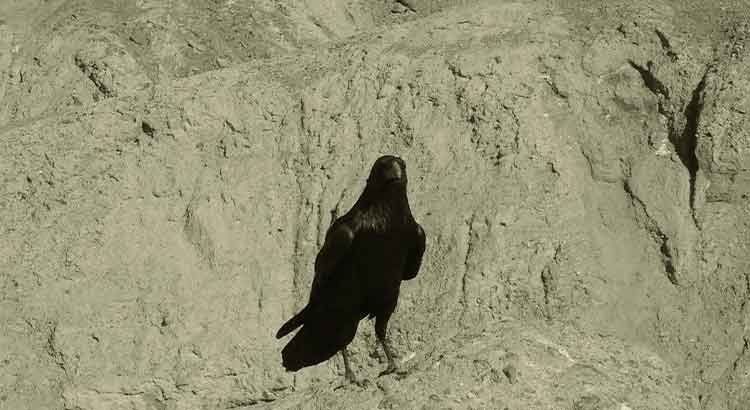
The man assumes himself to be unfair, rude and bad character, but never unintelligent. That is his only intolerable humiliation. Even the lowest of the low—and this one especially—thinks he is intelligent, or at least smart. Make the world an auditorium and ask only the beasts to raise their hands: not a single hand will be raised. The man—himself and his vanity—does not allow for this possibility. To do otherwise would be to consciously level oneself to an animal—something inadmissible, and impossible when he lacks conscience.
Category: Notes
Camões Is The Lusiads
Pessoa says, in free translation:
Camões is The Lusiads. The lyric, in which the inferiors focus the admiration that denotes them as inferiors, was, as in other epics of equally remarkable sensibility, only the inorganic surplusage of the epic.
And, on another occasion:
Camões mourns the loss of his gentle soul; and after all the one who mourns is Petrarch. If Camões had had the emotion sincerely, he would have found a new form, new words—everything but the sonnet and the ten-syllable verse. But no: he used the sonnet in decasyllables as he would use mourning in life.
What to say? First, it is diminishing for Camões to classify him as an epic poet: Camões was a poet. Like Pessoa, a poet of multiple manifestations, a great poet. Next, the aesthetic judgment. To reduce poetry to form is as low as judging a novel by the number of pages. There are sonnets in which one can find everything except Petrarch. What should be asked is: what is the poet doing in decasyllables? Is it possible to see him in his sonnets? We notice the obvious: when Camões cries, Camões is the one crying. And, if I were my vocabulary, I would add that the cry is more beautiful because it is shared, because it establishes a link with the past and is a manifestation of empathy, humility, and respect. Originality does not require the creation of a new format, sincerity does not necessarily have to invent the model of its own expression: it is enough that it expresses itself. It is notorious the brilliance of the poet when, composing under known rules, he expresses his individual soul.
The Most Striking Impact of Modernity on Philosophy
The most striking impact of modernity on philosophy is that the great philosopher is no longer the sage, but the reasoner. Philosophizing in modern times is, at best, creating concepts, but it essentially boils down to articulating and developing logical arguments around irrelevant topics. The word “philosopher” does not evoke in our minds a mature thinker, endowed with great wisdom, but someone interested in systematizations, in abstract concept strings—a freak for definitions. The modern philosopher has definitively lost the condition he enjoyed in antiquity, that of teacher of life: he has become a professional of reasoning, an architect of logic, and is unable to act as a preceptor or counselor. As a result, philosophy has lost its practical character: it no longer implies moral conduct and a posture towards reality. Isolated in its universe, it no longer has anything to say about the real world.
Hope Is Idealized Only by Those Who Have Never Seen It in Its Fullness
Hope is idealized only by those who have never seen it in its fullness, who have never measured its ultimate effects. Machado, who knew it very well, classified it as the “weed that eats all the other better plants”; the Greeks had it as the most terrible of all evils… Hope is idealized only by those who have never attentively noticed its destructive after-effects, the total ruin into which it often hurls the hopeful, clouding his reasoning faculty, his sense of the ridiculous, inciting him to take stupid and irresponsible decisions that risk him and those around him. It is reasonable that the hopeful should be treated like a child, like someone who needs to be told the limits, what can and cannot be done. It is always dangerous when he had in his hands instruments intended for healthy and mature adults.