

There is humility only in silence, in abstention, in the refusal of potentialities. A conviction, when externalized, is also a judgment of one’s own mental faculty. Only seeks to convince the one who holds himself in high esteem. A human being confesses a crime, but is unable to admit, by silence, the weakness of the intellect. Therefore, loquacity is the most evident sign of little wisdom.
Category: Notes
The Guy Reads the Newspaper and Wants to Tell the World His Opinions

I am impressed by the individual’s interest—and I do not know if I should say attrition—in that which is totally outside his field of action. The guy reads the newspaper and wants to tell the world his opinions. He argues with his neighbor, rebels at disagreement, clashes with whoever contests him. Then he buys more newspapers, tries to become more informed so that, on the next occasion, he can annihilate his opponents in a debate that will never lead anywhere. He spends time and nerves on the useless. For every page of the newspaper, he reads one less page of Shakespeare. He does not understand his insignificance, he ignores the harmful character of his posture. But he goes on, of course, in the name of his greatest virtue: vanity.
Rembrandt’s House
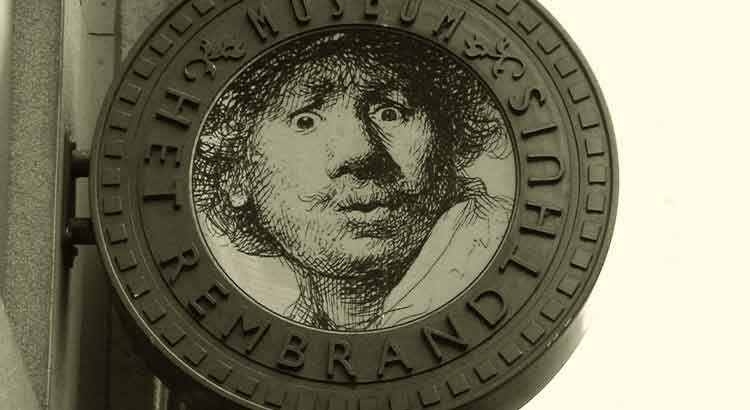
I follow through one of Valéry’s essays on Leonardo da Vinci and suddenly have to close it, lost in memories. I read “painting” and the word evokes in my mind the day I fell, by chance, by tremendous and unprecedented luck, into Rembrandt’s House. I entered the museum and did not even know who Rembrandt was, I was incapable of a single biographical note. And then, at the very first painting, I was violently attacked: I stood in front of the work, perplexed. I had never been struck by a painting before, and that day I was able to measure my lack of culture. I remember that, like an idiot, I kept approaching and moving away from the paintings, first noticing the effects when observed from a distance, and then the details, the individual brushstrokes, with features that reminded of the Indians in their first contact with the Europeans. I disconnected from what was going on around me and was impressed by the depth, the creativity in the arrangement of the planes, and the emotional charge of the canvases. When I was startled, the museum was about to close and the clock was telling me that I had spent four hours in the house, which, if crossed at a leisurely pace, takes no more than ten minutes of the visitor’s time. “He had never been in a museum”—the employees must have been commenting among themselves, while they were getting rid of me. But that day, an illiterate left a museum convinced that he had been, for four hours, in the presence of the greatest painter of all time. And he never forgot it.
No Society Can Endure and Thrive Without a Strong Cultural Base
No society can endure and prosper without a strong cultural base. A young country is naturally unstable. And a country that breaks with its origins, or stonewalls them, trying to erase its past, is heading toward collapse. Cultural destruction necessarily implies mass moral degradation. There is nothing more devastating to a society than an attempt to “rewrite the history”.