
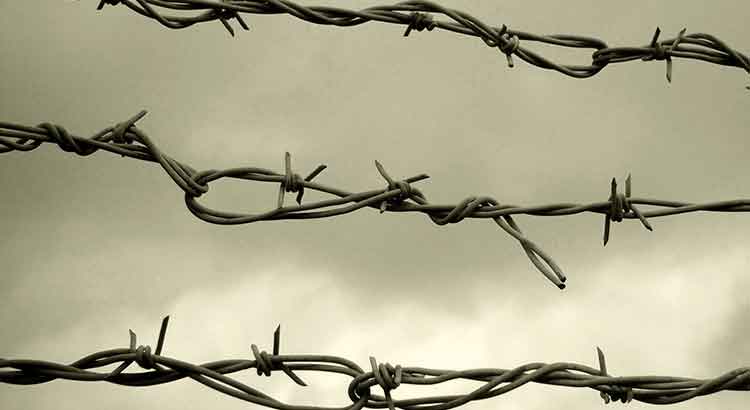
The tragedy of anarchist thought is that the common man is not worthy of freedom. It is necessary to restrain him, to punish him, to subject him to an authority that tells him what he can and cannot do. Starting from the opposite premise, the result is chaos. Rare are those who deserve freedom, those mature enough to bear its consequences. They pay for being superior… But how can we conceive of a world where the common man enjoys full freedom? No, no… no way! The world needs jails and police armed to the teeth.
Category: Notes
Nihilism and Anarchism

Nihilism and anarchism start from understandable and justifiable premises. However, as if by an uncontrollable attraction, they both end up tending toward an unjustifiable destructive action, or rather, an action promoting a worse reality. When carried out, nihilism is forced to level a murderer to someone who does not kill,—the opposite would be to admit a moral hierarchy,—which is an effective way to produce monsters. Anarchism, when ingrained in the soul, can only result in a violent response to all kinds of authority—it efficiently destroys, but does not seem capable of erecting on the wreckage something better. They both seem, nihilism and anarchism, doctrines doomed to throw the soul into darkness and materialize terrible deeds—although, on an individual level, they can be necessary stops to reasoning and, if allied to a peaceful nature and opposed to action, can serve as food for intellectual development.
Capitalism Has Imposed a Behavioral Philosophy…

Capitalism has imposed a behavioral philosophy that demands efficiency and professionalism in daily life. Anything different from this is abnormal, repulsive, contrary to the current dictatorship. It is necessary to answer e-mails, messages, return calls, and always and for everyone have the fake smile of a salesperson. A conduct based on the interest and concern with one’s own image—the others, always the others, the possible clients of an individual transformed into a company. From this comes the suppression of individuality: the action submits to what is convenient, annulling one’s own will. Practically, the being loses the recognition of himself, and with it the notion of importance and dignity. There does not seem to be a solution that does not start from complete exhaustion, which is converted into indifference and contempt for the world and gives rise to a behavior that horrifies the common person.
Peace Is the Joint Neutralization of Will and Feeling
Peace is the joint neutralization of will and feeling. However they manifest themselves, these are the spirit’s disturbers, agitators that disorient and move the being away from the healthy calm that configures peace. To understand this is to understand why even jubilation is harmful: great oscillations are undesirable when one intends to have a perennial and stable state, which serves as the basis for full harmony and makes possible a disturbance-free focus.