
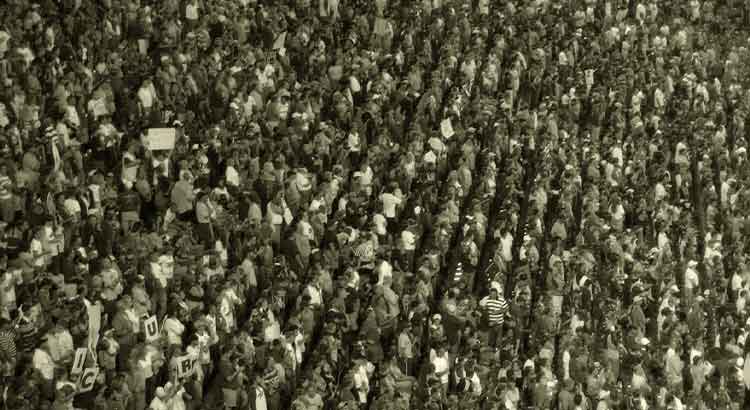
One of the most detestable side effects of a democratic society is the establishment of the veiled judgment that if the many are against one, the many are right. There is no more efficient process for a factory of cowards! From the moment a child is taught that to assert his opinion or will over that of another, it is enough to convince a third party to support it, he learns to operate cowardice—knowing its practical advantages over honor, an essentially individual virtue. If we think of whole generations brought up in this way, that’s the end!
Category: Notes
A Psychology That Submits the Unconscious to External Stimuli
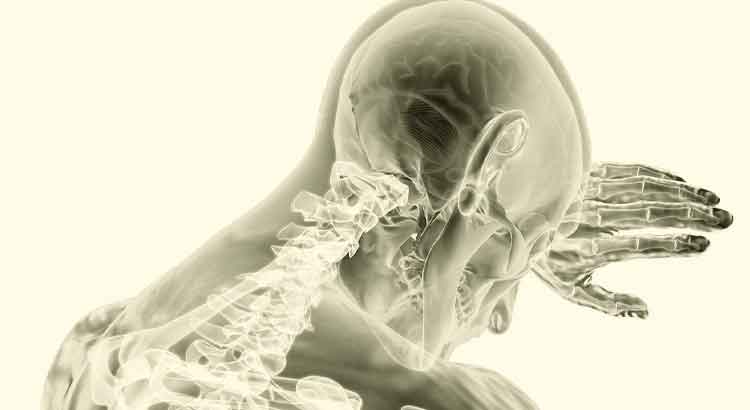
A psychology that submits the unconscious—and consequently the personality—to exclusively external stimuli may even be effective and applicable to the common man, but it will never be appropriate to the higher human model. Herein lies a clear limitation of psychoanalysis. It is true that experience, environment and the rest leave marks, but these may be minute compared to those of reasoning in the mind that has learned to disregard the exterior and has specialized in thinking. In this case, a dividing line is drawn between its early years and the moment when it discovered its own faculty. Having discovered it, it starts to exercise it in a meticulous behavioral analysis, which it judges to validate or invalidate what motivates its action. Then, it operates a remodeling—or improvement—of its own personality, in which internal stimuli begin to occupy the unconscious. The summary: the being frees himself from psychological chains—in case there are any—and builds himself up, becoming who he deliberately wants to be. To search in the past for justifications for the behavior of such a being, taking away his responsibility to act as he does or to be as he is, is to show oneself absolutely incapable of understanding him.
The Professional Writer Is Obliged to Have a Pen at Hand

The professional writer is obliged to have a pen and a notepad at hand at all times,—whether awake or asleep,—physical or virtual. Otherwise, he will lose most of his ideas, his work will suffer, and he will not be worthy of the professional epithet. Stories takes shape, solutions are found when conscious reasoning rests and the brain works quietly. Unexpectedly, although predictably, it manifests itself, so the professional must immediately register the manifestation, otherwise he tends to lose it. Cherishing his own work, the writer will never allow himself the luxury of wasting his moments of inspiration.
The History of Great Men Who Stood Out From the Crowd

It has been said—by Carlyle?—that the history of mankind is the history of great men who have risen from the null crowd that composes it. From this, the modern tragedy: the democratic social structure simply restrains the rise of great men, putting in their place abject demagogues, slaves to the popular will. To rise and achieve recognition, a modern man must become a spokesman for the stupid majority, setting aside his individuality to become a circus entertainer, a crowd-shaker. It is precisely the distinguished who cannot rise, this possibility being exclusive to those who resemble as many individuals as possible. The failure!