
It is curious how Kierkegaard, a prolix writer,—who sins by being prolix,—hardly irritates me. Although there are passages in his work that cause me great boredom, still they do not irritate me. Some others… Oh, God! The name of the moment is Jean-Paul Sartre. How is it possible that Sartre, a remarkable writer, can make me want to unlearn how to read, when I endure many, many pages of Kierkegaard’s prose? It seems that I can tolerate prolixity when I notice the author’s emotional state, when I notice that the topic is close to his heart, and, above all, when I notice his sincerity. On the other hand, if the author spends words on nothing, if he runs away from the proposed theme, losing himself in futile and vain reasoning, wasting my sight, then an uncontrollable impulse points out to me the exasperating character of what I am reading. I close the work, slam it against the shelf, and verbalize an insult. Sometimes I regret… This is not the case. Indescribable joy at abandoning Sartre to pull out a volume of Helena Blavatsky. Holy irritation!
Category: Notes
Nostalgia of the Dueling Days
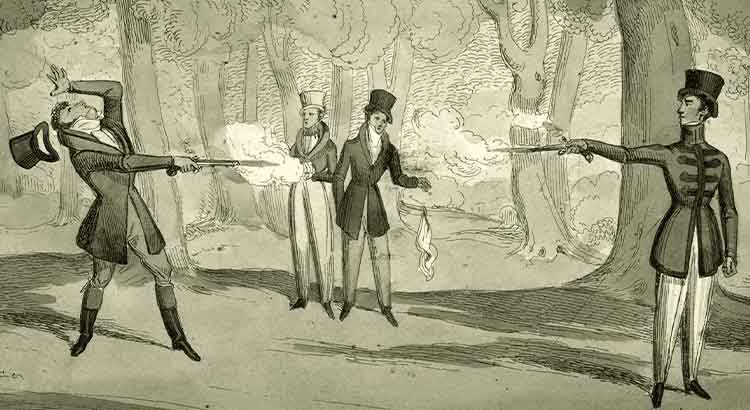
Today, an imbecile feels his vanity scratched and, in revenge, sneaks in to harm another by waging a hate campaign against him—that is, by inciting others to hate him; by rallying a cowardly majority. A few centuries ago, the offended, the truly offended, could resort to defiance, refining it if he left the choice of weapon up to the challenged. If the offended refused, he assumed to be a coward, and the honor of the offended was automatically redeemed. The duel was an instrument that put offenders in a very bad situation: the offended had only to win. If he lost the duel, he emerged as a brave man; if he won, he had his moral damage repaid. How everything has changed! In this age of cowards, dueling on equal terms has become literature: there is no one who challenges, and no one that has the courage to accept a challenge. In those days, when the possibility of a duel was evident, people respected each other more.
The Distinction of Music
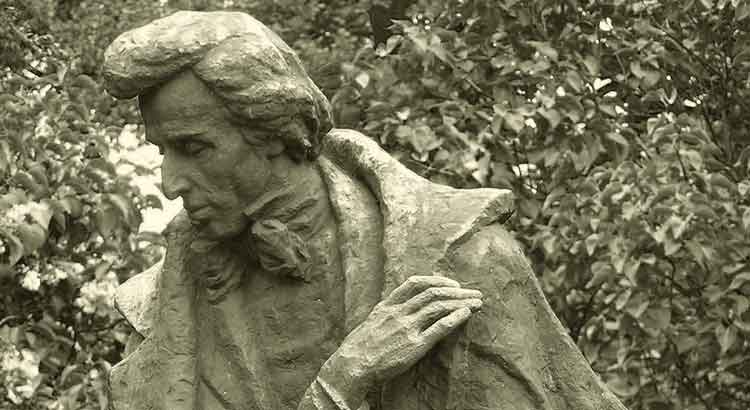
Among all the arts, music is undoubtedly the one that best allows the expression of nameless feelings, complex and logically inexpressible states of mind, as it is also the one that best permits the concatenation of disparate impressions and sensations, operating as if an impossible conciliation. To let oneself be conducted by a Chopin is to immerse oneself in a field where multiple emotions emerge, throwing the perception into ecstasy. Chopin: the genius who harmonized subtlety and intensity, raising them simultaneously to the summit—the first through the right hand, the second through the left.
Power Is Always the Reflection of a Relationship of Domination
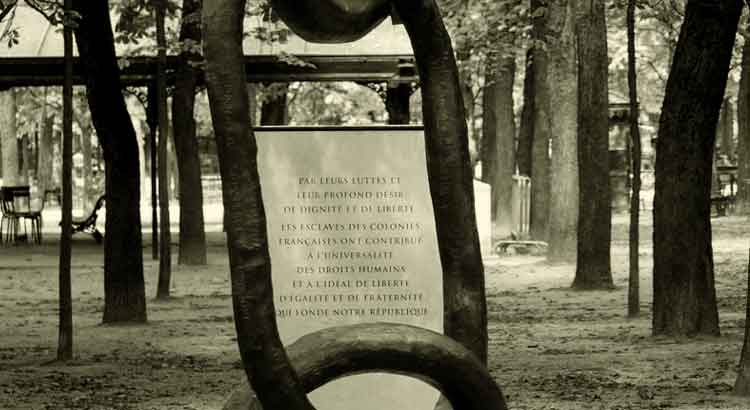
If we measure power by the aptitude—availability of means—to corrupt the will or action of others by imposing one’s own will, we see that power is always the reflection of a relationship of domination. If we break the relationship and isolate the dominating side, analyzing it from itself to itself, we notice that such power is useless and ordinary. The desire for power, in the vulgar sense, is always a desire that focuses its lens on the other, on subjugating the other, on strengthening oneself before the other—and therefore abject. To desire influence is to show oneself to be someone who, notwithstanding the manifest vanity, holds the other in prominence in the equation of one’s own life—belittling him, however, as one unconsciously belittles oneself.