Screaming in Front of a Screen

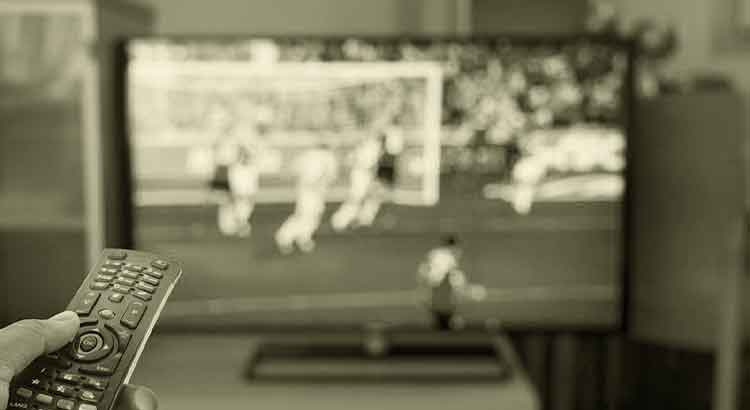
I try to concentrate on a difficult reading and the neighbor, screaming in front of a screen, punching the walls, stomping hard from one side to the other, does not permit. The text is Christian, Christian mysticism. And instead of reading it, absorbing it, I reflect on whether or not I should forgive the animal that screams endlessly. Angry, he will break something, I am sure. In five minutes he pronounced all the bad words I know. It seems the right-back of the team has done any nonsense. Goal of the opponent. Punches, screams, new bad words. And my noise muffler only muffles the damn noise. Should I forgive him? I try to think and an insult invades my mind. The animal risks a cardiac arrest for nothing, and the show loses its grace because it makes my room shake. I completely lose the thread of the narrative and the patience. I throw the book into any corner and let the judgment convince me: the “brother” makes any Christian argument impossible.

____________

Read more:
To Put the Motivation in the Hope of a Certain Payment is a Childish Attitude

The orthodox qualify as a mercenary who believes in the hope of eternal reward. As for practical life, it is a gross error to believe in any kind of meritocracy working, when in practical terms the existence itself contains a striking injustice. To put the motivation in the hope of a certain payment is a childish, fragile, if not vanity inducing attitude. To work hard daily, despite the future: this is the distinction of that which rises above a commercial relationship.

____________

Read more:

What is art?, by Leo Tolstoy

Very interesting essay, as always, in the case of this plume. To Tolstoy, the work of art is a means of transmitting feelings, that is to say: regardless of the qualitative character of the feeling expressed,—which can be good, bad, strong, weak…—the artistic work fulfills its role as long as this feeling communicated by the artist is experienced by those who come in contact with it. And the master, without evasions, carries out the consequences of this proposition, judging the various aesthetic theories over time and citing numerous artists as examples of great, bad, true, and false art. Essentially, he says, art is not a search for “beauty”,—nor any other abstraction,—but an instrument that enables the artist to transmit that which extrapolates the rational argument, to transmit personal feelings experienced by the author. Art, thus, establishes a link between the artist and the common man, justifying its noble role in society since it allows anyone to have experiences that would not be possible by any other means. Tolstoy also judges the art of his time mostly corrupted and risks some comments about the “art of the future”. The essay dates from 1898, the master passed away in 1910: he spared himself from witnessing how unfortunately all his predictions would fall by the wayside…

____________

Read more:

No to the Linguistic Cheating!

I read a hundred pages of Heidegger and throw the volume into space. Unbearable! A hundred sterile pages wrapped in the most abstract language of the universe, a hundred pages of rhetoric that seems deep, but clouds the thought, deceives by pretending to approach the last truths by being nothing but hollow and evasive. Terrible, terrible… But how pleasant it was to interrupt the linguistic cheating! to say no to the falsification of philosophy! Forgive me, idolaters, but I only see value in philosophy useful to someone who, in desperation, puts the barrel of a gun against a temple. Although, in truth, one Heidegger page is enough for anyone to pull the trigger…

____________

Read more: