
The Construction of a Logical Monument

I smile as I perceive my disgust with philosophical systems. The construction of a logical monument; the framing of reality, in all its infinite nuances, in a rational system: none of this arouses my interest, all this seems to me to come from a primary error. The construction of a philosophical system requires the mutilation of reality: its applicability in the real world, in practical life, is almost null. What is left beyond the system? Is there anything capable of impacting a conduct, altering a relationship between an individual and a medium, shaping a real posture? This is what I ask myself when I judge the work of a philosopher, and I smile when I see my inability to embark on the delirium and consider as wonderful that which is only applicable in the world of abstractions. The good philosophy must be able to see the jail, the madhouse, the monastery, and the whorehouse.

____________

Read more:
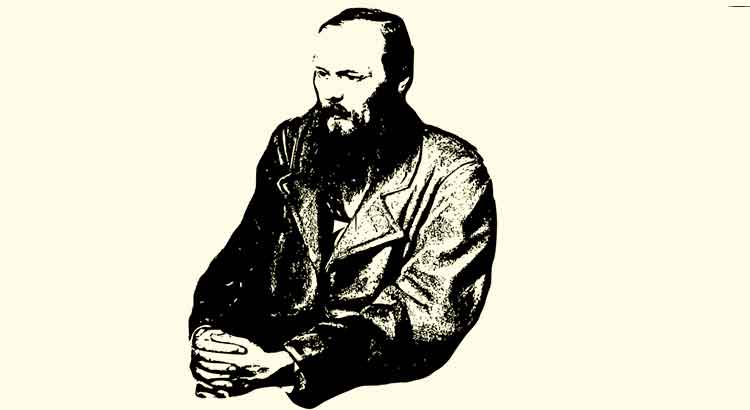
Dostoevsky and the Artistic Technique

Proverbials are criticisms of Dostoevsky’s style. Not only the Russians but also those who do not know the language usually say Dostoevsky is prolix, imprecise and many other things, taxing his texts as badly written or badly finished. Of these, however, most recognize the immense value of Dostoevsky’s work, which raises an interesting question. Hemingway, in A Moveable Feast, puts it in the following terms: “How can a man write so badly, so unbelievably badly, and make you feel so deeply?” The answer is simple: what is in Dostoevsky’s work goes beyond the artistic technique. On this one, I keep the numerous caveats to the so unbelievably badly for when I am able to read in Russian—caution, by the way, that Hemingway did not have. But the question exposes another even more interesting: what is the purpose of art? how does great art manifest itself? And the critics who judge the essence of art to reside in technique are wrong. Great art stands out, primarily, for the power of expression, for the effect it is capable of generating. And style, technique, form are accessories that contribute to the creation of this effect, many times amplifying the expressiveness of the artistic work. Different intentions, different techniques… And distinguishing the essential, it is possible to understand how authors of styles as disparate as Hemingway and Dostoevsky manage, both, to deliver us works of enormous value.

____________

Read more:

The Evolved Conscience Has to Behave as a Company

It is curious to note the movement of mass psychology. Beyond the utilitarian notion of value, now the evolved consciousness has to behave as a company, that is, not only to accept them gladly but also to long for feedbacks. Listen, O soul, ask for them and thank them, always! And the relationships—all of them!—have a commercial character. That is to say: the human being comes into existence for “customer satisfaction”. With a smile stretched out on his face, he shows maturity when he strives to please. Always the others, always the extra, always the group as sovereign criteria of validation of one’s own acts. And the “common sense” forcing the universality of submission. Oh, species! whose remnants of dignity seem subordinate to a voluntary migration of individuals back to the forest…

____________

Read more:

The Provincial Letters, by Blaise Pascal

The courageous retaliation of a man to the tyranny of his time; the confirmation of a moving biography; the manifesto of one of the most brilliant minds of all times. How can one read and not get emotional, not be taken by revolt? The sincerity with which Pascal expresses himself reveals all the nobility of his character. Insubmission to the court of men, daring to resist at a disadvantage, courage to put everything to lose: to read The Provincial Letters is to verify the highest manifestation of dignity in the human spirit, is to allow oneself to be in contact with a noble, limpid and eternal soul.

____________

Read more: