
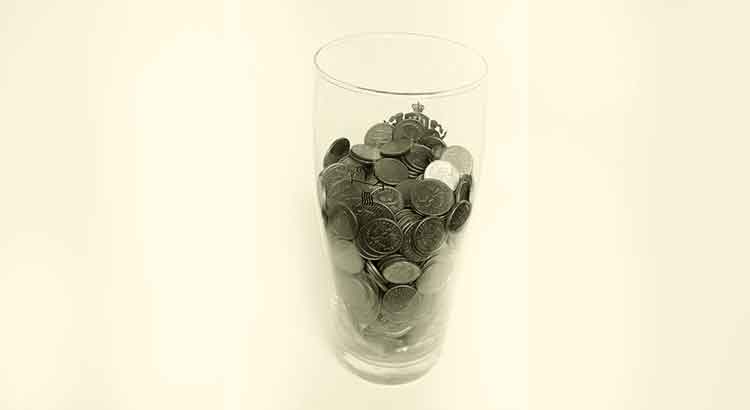
It is a formidable audacity that money has invaded the field of philosophy in the way it has. These days, any self-respecting treatise on individual freedom must devote a good few pages to this earthly and unpleasant subject. It is as if a huge bucket of dirt had been thrown on top of a fountain of idealistic conceptions. It does not seem that it would be possible today to live as many ascetics of times past lived; that is, it is unlikely that, today, those would not be subjected to necessary slavery. It is true that lack of money limits freedom, and one does not have to be a materialist to accept the hypothesis that, yes, money can also increase it. But what can money do for human freedom? At what point is it superfluous? If the common man, perforce, has to take part in the money-making culture, it is quite right that he should determine how much and how far he should sink. So therein lies an important object for ethics…
Eckermann’s Goethe
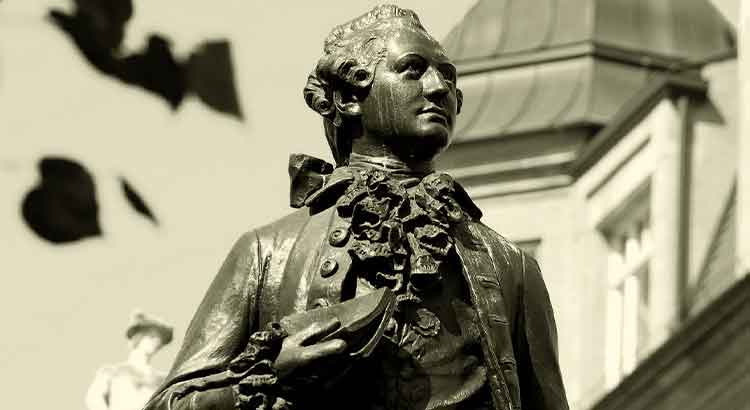
I let Eckermann’s Goethe speak while my mind is taken by a whirlwind of comments by Nietzsche, Jung, and Cioran. And I oscillate while Goethe talks about art and a thousand other subjects, sometimes enjoying his words, sometimes experiencing a complete strangeness. A complex and admirable spirit, no doubt. But a spirit from whom I think I am estranged, by inclinations and by the very conception of poetry, the poet and art. Goethe’s greatness as an artist and as a man is unquestionable. However, one could add here a truckload of reservations, which fortunately are not necessary because they are already present in Jung’s work.
Conversations of Goethe, by Eckermann
This forced, pomp-filled, literary modesty, so much to the taste of the praise-seekers, has nothing to do with modesty and looks more like vanity. Virtue, if authentic, is spontaneous. Simulated humility pleases as much as a false note. That said, the sympathy that true modesty can inspire is remarkable. Such is the case in these admirable Conversations of Goethe by Eckermann. From the very beginning, the author introduces himself to us with utterly unpretentious simplicity. He tells us succinctly and without dramatizing his origins, and conducts the work with a sincerity worthy of the highest appreciation. It is to be regretted that, even so, it has been shot through with ironies. But true virtue is inevitably envied by those who lack it. Eckermann is humble, simply humble, and his lines are pleasing, above all, because of the naturalness with which they present elevated themes. For form and content, it is a work worthy of the most sincere praise.
The Bon-Vivant Artist
Says Burckhardt, in my English translation:
Indeed, without this degree of force of character, the man of the most brilliant “talent” is either a fool or a knave. All great masters have, first and foremost, learned, and never ceased to learn, and to learn requires very great resolution when a man has once reached heights of greatness and can create easily and brilliantly. Further, every later stage is achieved only by a terrible struggle with the fresh tasks they set themselves.
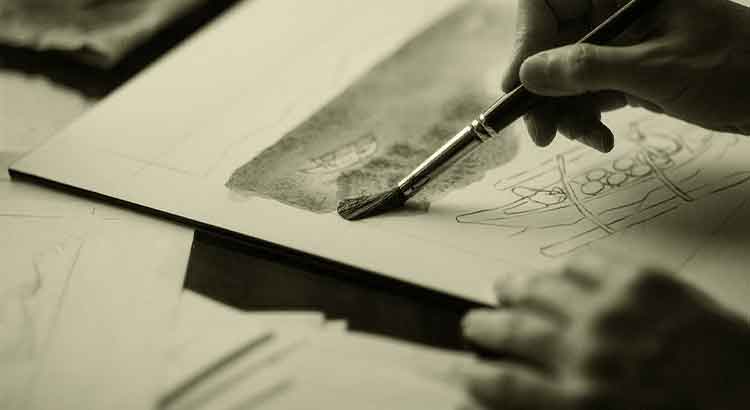
“Force of character”, “never ceased to learn”, “terrible struggle”… here is a sensible view of the state of mind that produces great works. It is really a joke this romanticized view of the bon-vivant artist, so widespread these days. According to it, the exercise of art is a pleasure, a diversion for idle moments. An artist of this sort is, if anything, mediocre. Faced with the posture of a serious artist, even the much-talked “search for beauty” seems outrageously futile. All this idealization of the artist and art does not seem to define very well the real motivation of the one who devotes a huge effort, who shapes his entire existence around his own occupation, never relaxing, never satisfied, contrary to what is convenient for him. Burckhardt, like a few, gives us a prudent vision of what true greatness represents.