

The first step for the one who does not want, at the end of his life, to feel it completely wasted is to find, as soon as possible, something that fills it with meaning, that motivates, that brings the desire to wake up the next day—this something is what is commonly called vocation. Having found it, he must then carry it out on a daily basis, regardless of the circumstances. If more urgent needs rob it of time, he must carry it out, however little it may be, but considering it as the unavoidable priority of the routine—to postpone it is to waste the scarce time. Thus, he should deliberate the current situation as temporary, and all the rest of his life should be aimed at creating the conditions that will allow him to exercise such a vocation full-time. No effort must be spared, and he must use everything at his disposal to achieve this goal and free himself from this routine that is inadequate. In this, he already achieves a previous satisfaction, he already experiences a feeling of time well used. Finally, there are two possible scenarios: for those who create for themselves the conditions to exercise their calling full time, all they have to do is exercise it; for the others, all they have to do is not give up, and then they will not close their eyes regretting wasting the opportunities they had.
I Go Through Several of Osho’s Speeches…
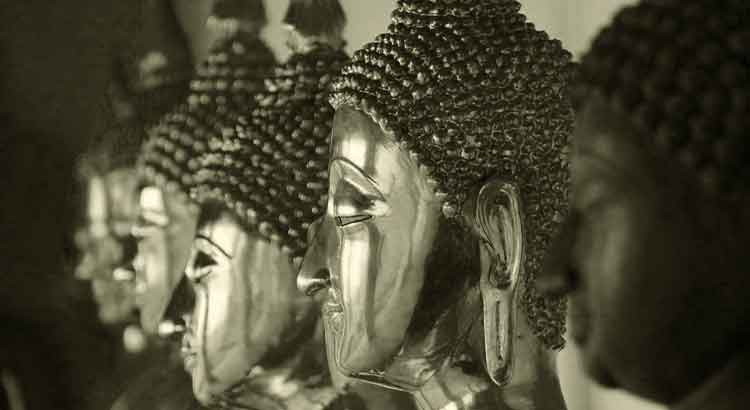
I go through several of Osho’s speeches and am gradually provoked by a funny irony. I, who have repeatedly pinned the “Western mind” and its formalism; I, as I go through these lines, question the author on each page: “Where did you get that from? Where is this and that other quote from the Buddha? And this sutra, where does it come from? Where are all these quotation marks coming from?”… It is as if a force is saying to me: “Isn’t this what you wanted? Weren’t you, even today, debauching the sterile referencing and lame reasoning of a guy?”. Yes, yes… The truth is that I am unbearably Western. I read Orientalists with pleasure, but it is possible that I would not even know how to behave in front of one of them. If I have learned and am learning anything from them, there is no doubt that there is a fundamental discrepancy between us that will never allow me to fully accept any of their doctrines, to see them fully impregnated in my thinking and acting, or, in other words, there is a limit to how much I can accept from them. So I enjoy a few hundred pages, but at some point my mind gets tired and demands a volume with bibliography and footnotes.
In Sequential Tonics…
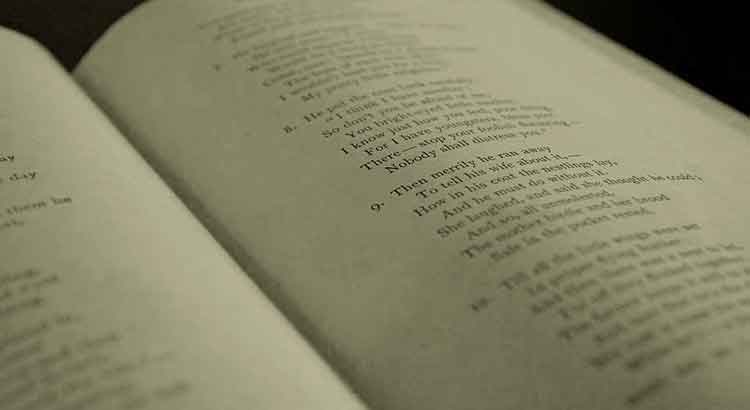
In sequential tonics, something that almost always sounds unpleasant in poetry, there is an accentuation scale that, by weakening the first accent, tones up the second. One could say that, in this way, a stronger accent is artificially generated in the verse than that of an ordinary tonic syllable: therefore, an unstressed accent rises to an accented one, which rises to a more accented one. Conversely, it is possible to generate an artificially decreasing accentuation movement in some cases when, working on binary verses, a proparoxytone word is inserted whose last syllable occupies a position where there should be an accent; the effect is opposite: this last syllable, although it is not, seems less accented than the previous one, thanks to the resonance of the first one, which thus appears stronger than it normally would. Both procedures, if used intelligently, can have interesting effects.
It Is Remarkable How Many Writers Have Broken Away….
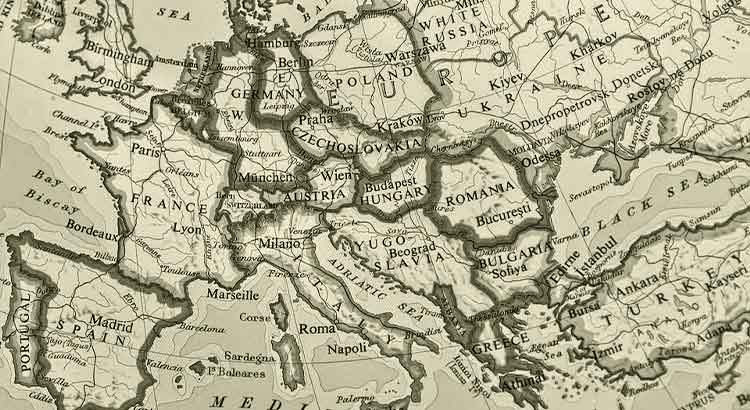
It is remarkable how many writers, great writers, have broken away from their mother tongue in the last century. This seems to have been the century of the exiled. A good number of them were expatriated due to the wars, but there were several who did it free from external stimulus. From this, the more or less natural decision to break away. Curious: it is unlikely that the pleasure or, perhaps, the fascination of writing in a foreign language lasts more than two or three paragraphs; the very arduous work that one has to do in front of the dictionary soon becomes apparent. But still, they went on, perhaps with a strength of will that deserves double the admiration. And what about the poets? They certainly escaped purgatory… And the trend, it seems, has not gone away with the century, with the difference that now they all seem to choose the same option. What to conclude?