
Although it is useful to try to attribute meaning to the unconscious mental manifestations, it is necessary to establish a scale of importance for what is being discovered; otherwise, the mind throws the analyst into terrible confusion. It is a simple mistake to believe that the mind only reveals that which occupies the position of greatest momentary or extemporaneous relevance, that everything it evokes has a deep and very important meaning: a little attention and common sense is enough to verify this. If at times it evokes images of unquestionable significance, at others it only seems to be playing. So let it play…
Rhythmic Disturbances
Rhythmic disturbances, if used purposefully and intelligently, seem to have an emphatic effect superior to almost anything that can be done in poetry. Sequential tonics, anticipation of the first accent of the verse, displacement of the main accent, proparoxytone words disturbing binary verses… these and other details, when applied to an apparent rhythmic stability, cause a powerful effect, suggesting from rapture to despair, typical manifestations of a harmonic rupture that drives the untimely expression. The technique, though it may be confused with error by the unwary, will never be by those who feel the verse as they read it: error damages, never strengthens the expression. For the rest, it is a remarkable quality of patterns that they allow themselves to be consciously violated.
It Is Not Fair to Demand From a Quadruped the Understanding of an Antero
I read, or rather, tried to read a biographical analysis of Antero signed by a psychoanalyst and judged it so infamous, so frighteningly stupid and fake, that I was tempted to rebut it in a furious manifesto, since I cannot insult the author personally. Unbelievable! The imbecile wants to credit to childhood the resolution of a man half a century old! His entire “analysis” boils down to revolting slanders, painting a noble spirit as an inert slave. I think again, however, and give up the endeavor, as it is absolutely useless. What good would it do to waste my time trying to prove that a psychoanalyst is shallow and foolish? to prove that the offense begins with a being of this kind, limited by such a visor, spewing out hunches about the life of a superior man? What else could he write, after all, since shutting up is impossible for him? And it is not fair to demand from a quadruped the understanding of an Antero. The best, no doubt, is for me to set an example myself: I close the essay, shut up, and pretend he never existed.
Voltaire, More Than Anyone, Had to Believe…
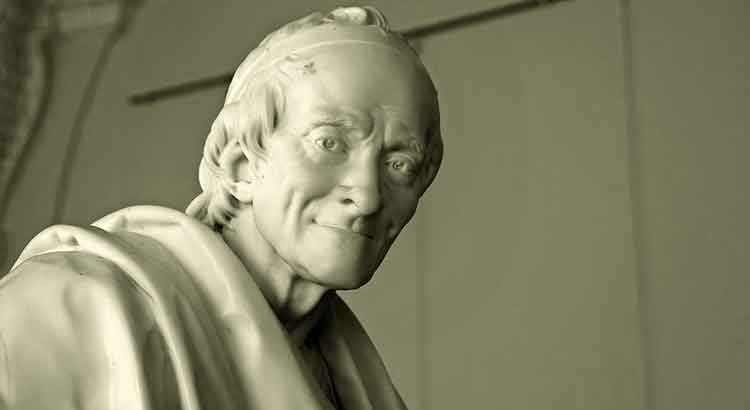
Voltaire, more than anyone, had to believe in the existence of a superior entity that granted him the grace to hit a prize horse and enjoy a stability that, to the overwhelming majority of mortals, seems like a fable. Voltaire, Voltaire… you have been roundly ungrateful! And look at that! As if this nonsense were not enough, we have a crowd of Boehmes who, unenlightened, feel enlightened. All this seems extraordinary to me. Are these consequences of hope? Is hope based on a need, and therefore absent in the eminent lucky one? Could it, so, be classified as a prize? Perhaps, perhaps…