

Buddhism is probably right in saying that there are conscious states we pass through before birth: the evidence for this is the lucid manifestation of all babies immediately after their first breath. If they are not born inheriting the consciousness of a previous state, it may be that newborns are visionaries, and this justifies their being born crying, screaming, desperate, as if they saw the beginning of a path of afflictions and torments. It is impressive to note their wisdom and knowledge of this earth. However, after a few years of training, they completely lose their lucidness…
An Effect That Is Difficult to Match
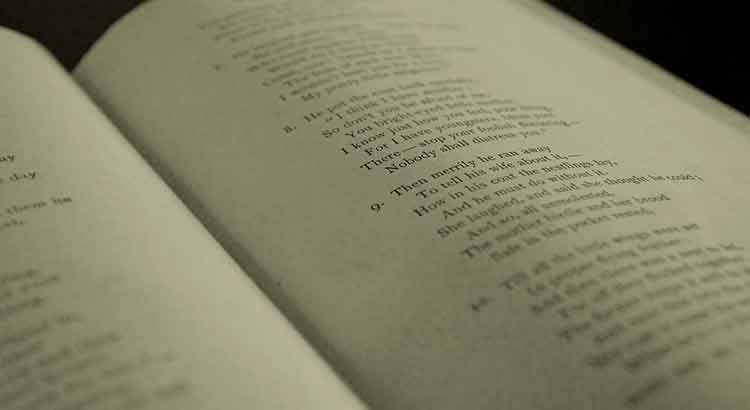
Metrics and, especially, rhythmic regularity deliver an effect that is difficult to match through other expressive resources in poetry. They both seem to stroke and fulfill the demands of the brain as it concentrates on unraveling the meaning of the words and interpreting the syntactical variations of the verses. In regular poetry, small rhythmic variations, drawing attention to themselves, sometimes succeed in emphasizing words and enhancing the expressiveness of some passages in the poem; however, when the rhythmic pattern is ostensibly broken, the disturbance caused seems to divert the mind’s attention from what it should concentrate on—the effect, in short, is aesthetically unpleasant. The rhythm, once grasped, generates an expectation for its continuity—and it is difficult to satisfy the brain by denying what it seems to ask.
An Enemy of the People, by Henrik Ibsen

Perhaps this play is a little too obvious. But it is worth asking: how not to be obvious when dealing with characters such as the people, the politicians, and the press? Figures as predictable as regrettable… The plot holds no surprises: an honest man, a free thinker, is crushed by the abominable tyranny of the masses, that “satanic compact majority”, supported by the opportunistic collusion between the abject powerful and the vassals of public opinion—those fearful of rejection. Dr. Stockmann is, like all higher spirits since the repugnant ideas of the philosopher of Geneva took root in the West, the victim of opponents so numerous that it is convenient to classify him as absolutely alone. There are no neutrals against Dr. Stockmann: there are cowards who connive by their silence and aggressive cowards who stone him, camouflaging themselves “under the cloak of the crowd”. Too obvious… The message of the work, however, is irrefutable: anyone who opposes the prevailing tyranny will be hunted to death! Perhaps the title of the work would sound better, instead of “An enemy of the people”, as just “The enemy”. I change my mind: perhaps the play’s brilliance is precisely its obviousness: for it shows what, as a rule, happens to real-life Stockmanns—with the exception, of course, of the play’s fifth act, which is overly optimistic for someone reading it more than a century after its publication…
The Great Drama of the One Whose Life Is Filled…

The great drama of the one whose life is filled with existential torment is that there are no valid answers to his questions other than the ones he himself validates. How can one bear it? Add skepticism to existential restlessness, and one has certain despair. The skeptic tends to reject possible answers to uncomfortable and unverifiable questions: from this stems his misfortune. He cannot accept what religion, esotericism, mysticism says; he is programmed to reject what he has not experienced. One can open an astrology book and find satisfactory answers for everything; one can take comfort in Christian salvation, Buddhist deliverance—but not for the one who refuses to believe. Every existential restlessness leads to a dilemma: to accredit by comfort what one receives without full proof, or to throw oneself into limitless affliction. Some, like Pascal, add a dose of reasoning to belief; others seem doomed to dissatisfaction.