Reverse Motivation

I finish, after a long day of work, the plot of my second book. Now I have thirty finished short stories, in volume already revised, and sixteen poems ready for publication. The work of these days is a novel that I will finish in the coming months. Set the plot, I scare: horrible! Horrible and frustrating… I feel, beforehand, disgust for what I will put myself to write and my sincere desire is to set fire to everything I write, immediately give up the endeavor that will take me a huge time, an outburstal psychological effort and bitter nights thinking about what I wrote. But I realize that if I do, I will have no more reason to wake up. I see this terrible sarcasm laughing at me and, who knows where, I get a strange sense of duty that, incredibly, imbues me with an unshakable motivation. Disgusted, I find myself dependent and hostage to this duty.

____________

Read more:

The Homeland of Letters

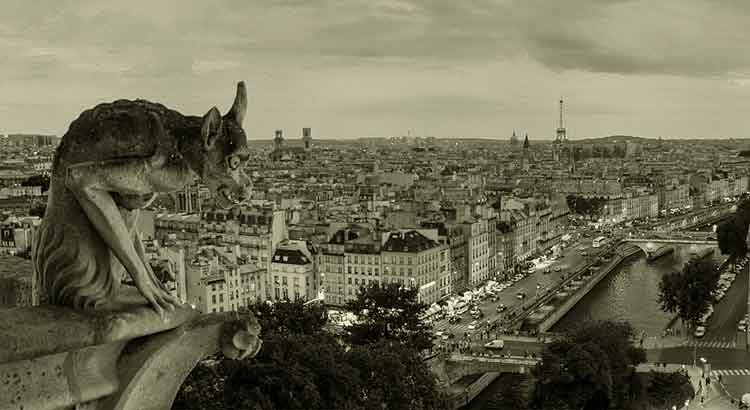
I was in Paris in mid-2019. As soon as I disembarked, I deliberated: I will use my stay to buy some works that I have difficulty finding in Brazil.

Well, It was my first time in Paris. They advised me to search for the books in small tallows on the edge of the River Seine, near the Louvre, to find the best prices. There I went and arriving, you see, I found not one, but twenty tents lined up, all of them full of books. “I am in the homeland of letters” — I thought.

So I started doing math: I did not have the space or the money to take everything I wanted to buy. I would have to choose, say, four or five authors and that’s it. I desired, anyway, a physical version of Baudelaire’s Les fleurs du mal; Aveux et anathèmes, by Cioran, was another indispensable purchase. I therefore decided and asked the first seller, “Avez-vous quelque chose de Baudelaire, Cioran, Flaubert ou Maupassant?“. The quelque chose sounded to me like insolence. There would certainly be the complete works of all the authors…

The salesman searched, searched, searched and returned the answer: “Non“. I went to the next tent; again the answer: “Non“. So I passed in each of the stalls, always asking the same question, and always getting the same answer. When I received the last “non” and noticed that the tents had run out, I just did not believe it, I thought it was impossible the scene I had just experienced.

There were, as I said, about twenty tents, each with two, maybe three hundred books. How did none of them have a single work by Charles Baudelaire, the greatest poet of the 19th century? I understand the French do not read Cioran, but Baudelaire? Flaubert?

Then the obvious question popped into my head: “If there is no Cioran, Flaubert, Maupassant or Baudelaire, what are these tents full of?” And, believe it or not, sweeping the nearest shelf with my eyes, there I found, in a prominent position, L’alchimiste, by Paulo Coelho.

____________

Read more:

Talent is a Long Patience

Some interesting words from Guy de Maupassant, in my translation:

Later Flaubert, whom I sometimes saw, took affection for me. I dared to send him some essays. He read them kindly and said to me, “I don’t know if you will have talent. What you have brought to me proves a certain intelligence, but don’t forget that, young man, that talent — in Chateubriand’s words — is nothing but a long patience. Work.”

____________

Read more:

The Basis of Literature

Charles Bally, Swiss linguist, makes a very virtuous reflection in his Traité de stylistique française. He is extolling the importance of the spoken language, with all its subjective burden, for literary language: he says the literary language feeds and rejuvenates the spoken language. He then says the aesthetic pleasure derived from the literary form is directly related to the spoken language, since such pleasure is nothing but the capture of a “sublime deformation” operated by the artist, which is only perceived through comparison.  Bally reinforces that emotion, the quality of ideas or its organization were never enough to consecrate a literary work, not allowing us to quote a single masterpiece that obtained its consecration by abstaining from the form. Charles Bally then concludes, in other words, that the day when there is no form, and there is no contrast between the spoken language and the literary language, there will be no more literary language, and literature will be dead. Excellent, excellent! Now let us analyze the progression of poetry and prose over the centuries and draw our conclusions…

____________

Read more: