
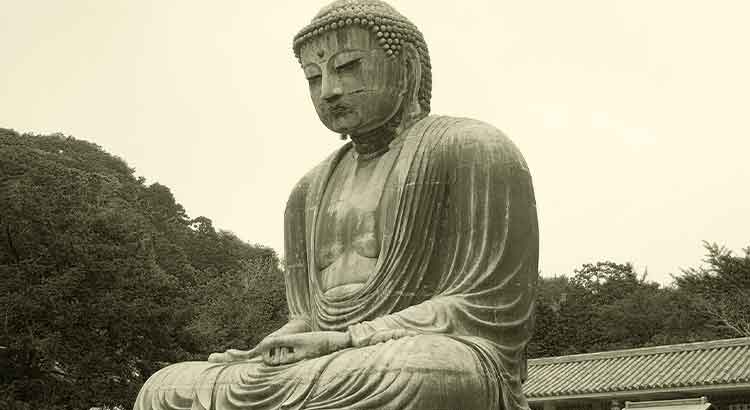
The language of the highest Dhammapada is the only language in which ethical precepts should be expounded in texts that purport to be called sacred. The Dhammapada does not resort to the regrettable route of orders and threats, where there are plenty of imperative verbs. It does not command, it does not demand, and although it is written in very simple language, it is impenetrable to those unaccustomed to reflection. It is a luminous and profound text, intended for superior creatures, which uses a respectful oratory, never intending to win servants, train evildoers, or impose itself through a moral imperative. It makes precepts available, justifies them patiently, and let follow them those who want to do it. In short, the language of the Dhammapada is that which an educated man uses when he respects the intelligence of his interlocutor.
Tag: religion
A Spectacular Scene!
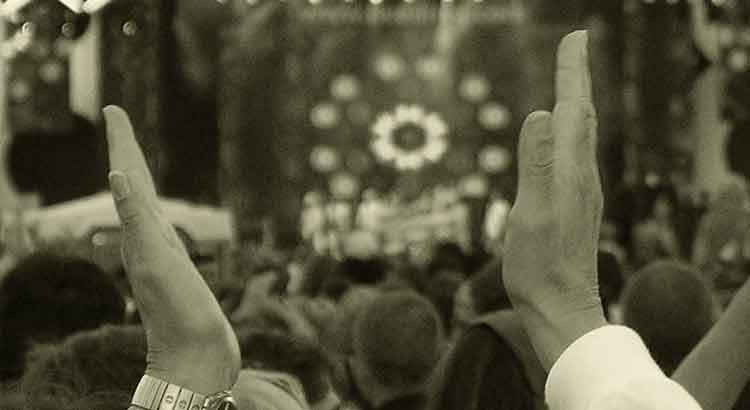
A spectacular scene! I was standing in a line, waiting. The delay allowed me to notice a small television turned on at one end of the room. On it, a fashionable fellow dressed in a bright red jacket was holding a microphone and singing excitedly. I did not know him, nor could I hear him, since I had headphones on. But he was certainly one of the most famous singers of our time, because he sang on a sumptuous stage, backed by a huge band, with fifteen backing vocals correcting his voice. And there were many, many people in the audience. However, it was none of this that I noticed. What amused me was imagining that at any moment the women in the audience would throw their panties at the man, as they usually did a few decades ago. When the camera brought them into focus, the looks on their faces confessed that the moment was near. Then I began to notice that there was something strange about that show. That I did not know the artist was not strange: I would hardly be able to identify a single face among the ten best known these days. But something did not fit. It was not the red jacket, nor the showy hair… the keyboard player? Ah! so I understood! And it was not without astonishment that I distinguished, behind the stage, the details of the environment. They switched the shot and, from another angle, I was sure: the show was being performed in a church!
Words of Order and Words of Hate

Two things spoil the beauty of a religion: words of order and words of hate. A fanatic will immediately object, “It is the duty of the righteous to hate what is evil!” Oh, but of course, my friend! And bad, of course, are they!… If we analyze the destructive and pernicious effects of religions, if we try to understand why so many corpses and so much blood have been shed under the pretext of praising and honoring them, we will see that everything goes back to the lamentable tone in which several of their pages were written. The tone of order degrades the believer to a servant, and the pride of the servant requires him to demand from others the same servile posture, even if he is not ordered to do so. What can we say about hate?… an evil quality, responsible for blinding man and tearing his humanity from him, an inciter of pride and ignorance, a catalyst for a worse human being. Religions debase themselves from the moment they start talking about adherents and not adherents.
Screaming in Front of a Screen

I try to concentrate on a difficult reading and the neighbor, screaming in front of a screen, punching the walls, stomping hard from one side to the other, does not permit. The text is Christian, Christian mysticism. And instead of reading it, absorbing it, I reflect on whether or not I should forgive the animal that screams endlessly. Angry, he will break something, I am sure. In five minutes he pronounced all the bad words I know. It seems the right-back of the team has done any nonsense. Goal of the opponent. Punches, screams, new bad words. And my noise muffler only muffles the damn noise. Should I forgive him? I try to think and an insult invades my mind. The animal risks a cardiac arrest for nothing, and the show loses its grace because it makes my room shake. I completely lose the thread of the narrative and the patience. I throw the book into any corner and let the judgment convince me: the “brother” makes any Christian argument impossible.
____________
Read more: