
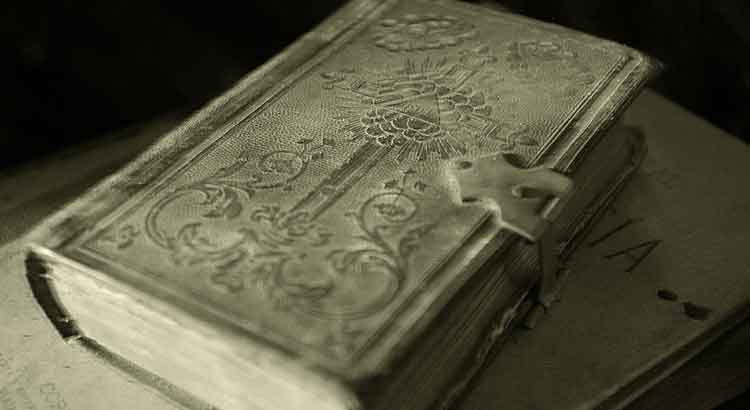
There are many advantages to publishing small volumes on a regular basis rather than letting the work grow indefinitely. The first is the more tolerable distribution of the revision work. Another, and perhaps the main one, is that one does not know when death will come, and it is good to avoid the risk of having passages published that would never pass the most faulty and inattentive revision, as one sees a lot in Kafka’s Diaries. What irony! Kafka, who loved to label as bad and burn what he wrote, had published in its entirety, with obvious errors and many idle lines, a work that he would probably have thrown on the bonfire. No doubt, it is something that could have been avoided.
Tag: writing
The Poet Easily Becomes a Good Prose Writer
It has been noticed that the poet easily becomes a good prose writer, while the opposite hardly ever happens. Compared to prose, poetry is so much more difficult that the first seems almost funny to the poet. To compose verses, one must first be in a propitious state of mind, that is, in a state of mind that allows one to concentrate entirely on the composition. Dispersed, the mind does not make poetry. Then, the slowness in composing, the technical difficulties, the large number of elements that must be harmonized in the creation, all this, over time, accustoms the mind to a patience and discipline that, for prose lines, is far beyond what is necessary. One does prose by force; fluid and natural prose. The simple movement of the fingers is enough to stimulate mental creation which, as if by automatism, registers itself as it is being created. How different it is to write poetry! The prose writer who is used to this almost therapeutic ease, if he risks composing verses, will find something very, very different…
For the Beginning Artist, It Is Intimidating to Find Himself…
For the beginning artist, it is intimidating to find himself preceded by dozens of centuries and an incalculable number of other artists who have done what he only intends to do. If we add the critics and art theorists, we will have an infinite number of judgments, schools, definitions of what is or is not art, what is or is not good, what should or should not be done. In this, the one who is still struggling to find the expression of what he feels will find himself bombarded and will hardly risk the first step, it being more comfortable to silence his inner voice. The truth, however, is that the artist has to assume himself, and the sooner he does so, the better. All this immense past, which enchants and intimidates, must be used to the extent that it is useful to him, and should never be an obstacle to the expression of what he thinks is fair. It takes courage! And, moreover, personality to execute exactly what he wants.
The Difficult Thing in Art Is to Make Intelligent Use of It…
The difficult thing in art is to make intelligent use of the spontaneous manifestations that arise during the process, inserting them into the predefined structure without harming the whole. Often, the highest peaks of a work are the result of unexpected flashes of light that the author knew how to take advantage of. The whole, it is true, lacks order; and order is not made from a spark that suddenly springs up in the spirit. But the artist, if surprised by the adventitious idea, will do very well to transfer this surprise effect to his work. Art will win.