
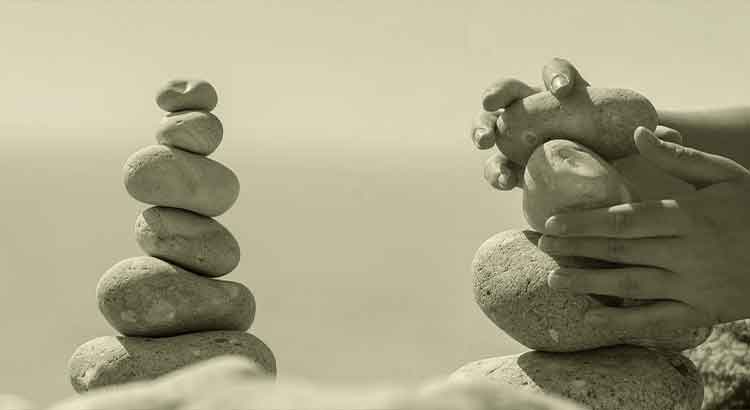
Poetry, this terribly difficult art, is a continuous exercise of patience. In poetry, haste is always the error. It is a real upheaval to know that, on the one hand, one must take advantage of spontaneous manifestations, which spring up in bursts and give great power to the verses; but, on the other hand, one must let the verses cool down, solidify, and then grind them calmly, adjusting the rhythm, changing words, refining expression. The stab wound of noticing a blemish caused by hastiness is extremely painful. A whole exhausting work, therefore, is spoiled when it is no longer possible to repair it. From it, to the artist, only failure, only frustration will remain. That is why poetic work is an exercise in self-control, in patience, where the poet must also act as a strategist, releasing and containing his impulses, suspecting himself even when he will conclude that he should not do it. And, still, it will not be enough…
Tag: writing
Every Artist Has Inclinations and Deficiencies
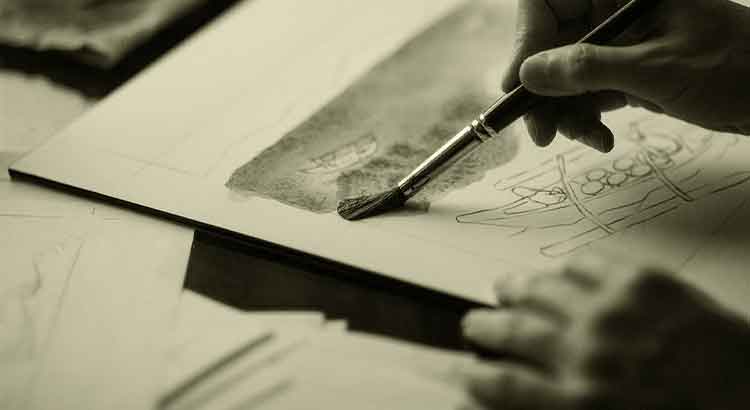
Every artist has inclinations and deficiencies. There are themes that, by an innate disposition, come out naturally and brilliantly; others, however, present difficulties. Therefore, first of all, it is important that the artist is able to identify and classify them. Then, it is necessary to work to develop his weaknesses, and this is done by exercising the representation of what is opposite, exploring forms, taking risks. In art, of course, there are choices; but there are also weaknesses, and these, if not taken on board, in their own way, will always manage to become entrenched as obvious defects. Thus, will be complete the artist who, through effort, converts into strength that which is not natural to him.
The Bon-Vivant Artist
Says Burckhardt, in my English translation:
Indeed, without this degree of force of character, the man of the most brilliant “talent” is either a fool or a knave. All great masters have, first and foremost, learned, and never ceased to learn, and to learn requires very great resolution when a man has once reached heights of greatness and can create easily and brilliantly. Further, every later stage is achieved only by a terrible struggle with the fresh tasks they set themselves.
“Force of character”, “never ceased to learn”, “terrible struggle”… here is a sensible view of the state of mind that produces great works. It is really a joke this romanticized view of the bon-vivant artist, so widespread these days. According to it, the exercise of art is a pleasure, a diversion for idle moments. An artist of this sort is, if anything, mediocre. Faced with the posture of a serious artist, even the much-talked “search for beauty” seems outrageously futile. All this idealization of the artist and art does not seem to define very well the real motivation of the one who devotes a huge effort, who shapes his entire existence around his own occupation, never relaxing, never satisfied, contrary to what is convenient for him. Burckhardt, like a few, gives us a prudent vision of what true greatness represents.
Mastery in an Occupation Is Conditioned to the Starting Point

Nietzsche said somewhere that mastery in an occupation is conditioned to the individual’s starting point, more specifically, to how much he receives as a legacy. So for the son desirous of eminence, it is recommended that he follow in his father’s footsteps. There is a good deal of truth in this; but, as always, the exceptions are more curious than the rule. What a wonderful sense of the irony of fate in placing a Nietzsche as the son of a Protestant pastor! and a Cioran, growing up the son of a priest! From these and other examples we note that eminence, besides the enhancement of the legacy, also accepts violent rupture as a starting point.