
Nelson Rodrigues’ way of constructing prose is curious. Whether in novels, short stories or even chronicles, it is clear his obsession with framing the text within a predefined aesthetic—he acts in prose as poets do in verse. The flow of his narratives almost always follows a protocol, and the result is a pronounced and unmistakable style. There was a time when I thought standardization was essential to great style. Today I see it a little differently. I admire regular constructions, but I believe I prefer variety: speed one day; the next slowness, a lingering cadence, commas instead of periods. Styles, formats, measures, not static dynamism or terminating sluggishness. What is difficult, however, is to identify masters in multiple styles, capable of satisfying, in a single work, the cravings of who is accustomed to finding comfort by shifting of shelves.
Tag: writing
The Best Narrative Requires Methodical Structuring
Various experiments have led me to think that the best narrative requires methodical structuring. It is true: one makes prose free-minded, letting it flow, with interesting results. Yet the effect of a narrative is almost always weaker if we notice major structural lapses in it. Why is it tepid? Why is it unconvincing? We often find the answer in its sequence, in the way it is organized and progresses. By the side of the artist, it seems interesting to sit down and build with total freedom, unattached to structural ties. However, there seems to be a lure there. Great art seems to require an omniscient artist who, at every step, strives to simulate the naturalness of what he is creating.
The Men of Letters
Determinism is repugnant. In all its innumerable manifestations, it always presents itself in a mediocre and infamous aspect. However, there are things that cause astonishment. For example, the men of letters. To glimpse all the conjuncture they face, and still dedicate a life to the construction of a work… Deprivation, renunciation, anguish, humiliation… And there they are, overcoming obstacles, with an unjustifiable determination, facing a horizon free of any compensation, working day after day. The explanation only lies in a kind of duty, incomprehensible to most, and which exceeds the rational sense. Individual motivation may well lead to insanity, as long as it abstains from the use of reason. It is hard not to say about these men that they are stimulated by something that goes beyond them…
A Movie Script Worths Its Structure
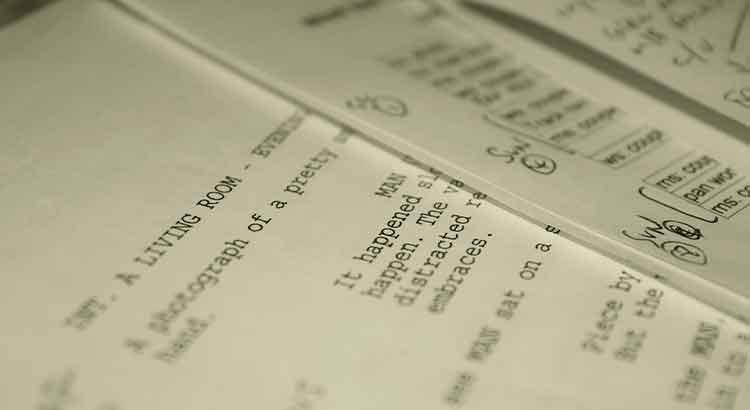
In an untimely manner, I set out again to write film scripts. The work of the moment, which was beginning to crawl, is interrupted. And I do not know what to feel. Perspectives, I have few, whatever I am creating. But the ease of spitting out pages of screenplay jumps out when compared to the agony of literary creation. The screenwriter sees his work progress, every day, and finds manifest satisfaction. A screenplay, in fact, worths its structure, its effectiveness in distributing scenes within a predefined format, and its strength in exposing a dramatic arc. The screenwriter works on the structural demarcation of the text: he defines the conflict, its progression through the plot, and its ending; then he distributes it into scenes, with positioning and length following the dramatic arc and the format of the work. Then it is just a matter of formalizing, or rather, transforming the diagram into text. With well-defined characters, the dialogues spring up with amazing ease, in infinite variations. Of course, they are to a great extent adaptable, replaceable: the script, which is nothing but the outline of a work, worths its outline itself. And I, from being an artist, return to the role of a diagrammer.