

I start memorizing Russian declensions and think about Buddha. My mind has always been opposed to deliberate memorization. But it is impossible to assimilate inflected languages without memorizing declinations! What to do? Buddha… Buddha certainly did not handle any of these languages, except for Pali—but when meditating, I doubt that he thought about their declinations. Although I do not know the path to nirvana, I know like no one else a path that makes nirvana impossible, that expels the being from any imaginary nirvana… Prove to me, Buddha, your superiority! Aquila, aquilam, aquilae, aquilae…
Category: Notes
Knowing English Is a Duty of the Modern Intellectual

Knowing English is a duty of the modern intellectual. In the first place, because English literature is the greatest in the world—that is, it has the largest number of, and has for the longest time consistently produced, first-rate authors;—secondly, because it is the closest to a universal language—that is, the language of the most common interchange and also the language of specialized literature in most areas of knowledge;—and finally, because the English have translated everything: it is often easier to find an English translation than an original French, Italian or Spanish, to say nothing of less popular languages. Knowing English, therefore, is not only to make one’s study life easier, but an obligation since the lack of English deprives the student of much of the best that is available. From all this, the problem. The Portuguese-speaking writer, for example, the more he gorges himself on English, the more he must fight to not, under any circumstances, allow it to penetrate his writing. A language whose strength, simplicity, is also its greatest weakness: syntactically, English is limited; when translated into Portuguese, its poverty is stark. Bad translations from English are intolerable, and even originals should be read with great care, preferably interspersed with vernacular works, and the precaution should be the same as that of the chemist who puts on gloves before working.
Democracy: the Factory of Cowards

One of the most detestable side effects of a democratic society is the establishment of the veiled judgment that if the many are against one, the many are right. There is no more efficient process for a factory of cowards! From the moment a child is taught that to assert his opinion or will over that of another, it is enough to convince a third party to support it, he learns to operate cowardice—knowing its practical advantages over honor, an essentially individual virtue. If we think of whole generations brought up in this way, that’s the end!
A Psychology That Submits the Unconscious to External Stimuli
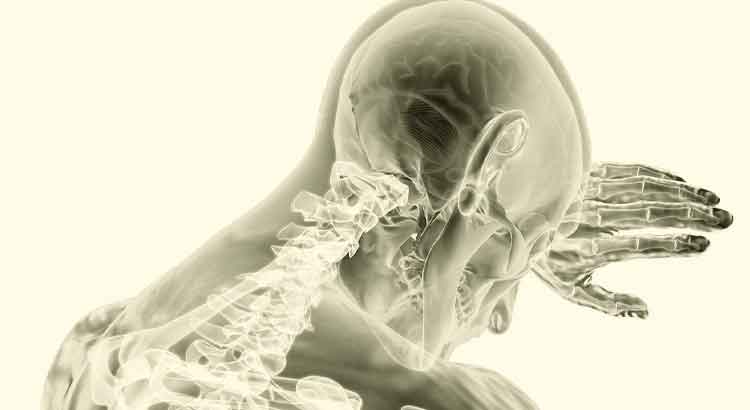
A psychology that submits the unconscious—and consequently the personality—to exclusively external stimuli may even be effective and applicable to the common man, but it will never be appropriate to the higher human model. Herein lies a clear limitation of psychoanalysis. It is true that experience, environment and the rest leave marks, but these may be minute compared to those of reasoning in the mind that has learned to disregard the exterior and has specialized in thinking. In this case, a dividing line is drawn between its early years and the moment when it discovered its own faculty. Having discovered it, it starts to exercise it in a meticulous behavioral analysis, which it judges to validate or invalidate what motivates its action. Then, it operates a remodeling—or improvement—of its own personality, in which internal stimuli begin to occupy the unconscious. The summary: the being frees himself from psychological chains—in case there are any—and builds himself up, becoming who he deliberately wants to be. To search in the past for justifications for the behavior of such a being, taking away his responsibility to act as he does or to be as he is, is to show oneself absolutely incapable of understanding him.